For years, my laundry room was one of the most frustrating spaces in the house. Every load of laundry meant bending down to load the washer, reaching into low drum openings, and hunting around for detergent that never seemed to stay organized.
Replacing perfectly good appliances just to gain a few inches of height didn’t make financial sense, so I started looking for another solution. That’s when I decided to build my own DIY laundry pedestal.
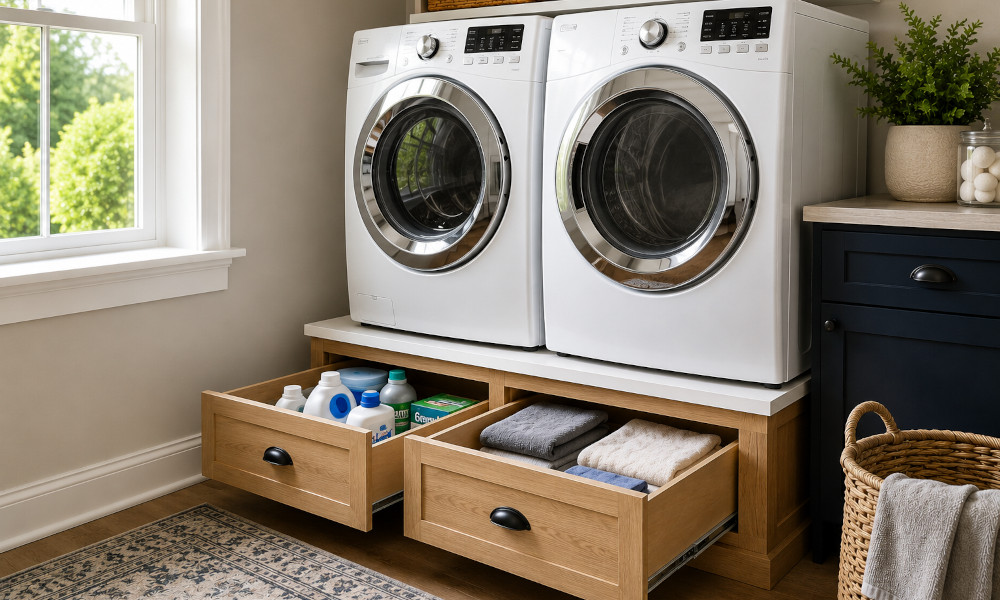
It turned out to be one of the most useful weekend projects I’ve completed. Not only did it raise both appliances to a comfortable working height, but it also gave me valuable storage underneath for laundry supplies that had been cluttering shelves and cabinets.
If you’ve been thinking about building a DIY washer pedestal, homemade washer stand, or raised washer platform, here’s everything I learned along the way.
Project Overview
Project Time: One weekend
Skill Level: Beginner to Intermediate
Estimated Cost: $120 to $220
Key Takeaways
- Build a custom washer and dryer pedestal for far less than buying factory-made models.
- Raise your appliances to reduce bending and back strain.
- Add hidden storage with pull-out drawers.
- Customize the size to fit your laundry room.
- Improve both organization and functionality with one project.
Materials You’ll Need
Everything I used came from a local home improvement store.
- 2×4 lumber
- 3/4-inch plywood
- Structural wood screws
- Construction adhesive
- Heavy-duty drawer slides (optional)
- Plywood or MDF for drawer boxes
- Wood filler
- Sandpaper
- Moisture-resistant paint or stain
- Polyurethane (optional)
Tools
- Circular saw
- Drill and driver
- Tape measure
- Carpenter’s square
- Level
- Clamps
- Orbital sander
Plan Your Dimensions Before You Cut
One mistake I almost made was cutting lumber before measuring everything twice.
Although most washers and dryers have similar footprints, even half an inch can make a difference. Mine measured just under 28 inches wide and 30 inches deep, so I built the platform slightly larger to leave room for vibration and easier maintenance.
The finished pedestal measures approximately:
- 58 inches wide
- 30 inches deep
- 12 inches tall
Those dimensions comfortably support both appliances while providing enough room underneath for two large storage drawers.
If your machines are different sizes, adjust the measurements accordingly.
Step 1: Measure Your Laundry Space
Before buying materials, I measured not only the appliances but also the laundry room itself.
This sounds obvious, but it’s easy to forget about water hoses, drain lines, electrical cords, and dryer vents. Leave several inches of clearance behind the pedestal so nothing gets pinched when you slide the machines into place.
While checking these connections, I also inspected the hoses and vent for signs of wear. It’s much easier to spot small issues before lifting heavy appliances onto a new platform. If you notice damaged hoses, loose vent connections, or other problems that go beyond basic maintenance, it’s worth addressing them first or consulting a professional who specializes in appliance repair in Marietta.
I also checked that the floor was level before starting. A sturdy pedestal won’t solve vibration problems if it’s sitting on an uneven surface.
Step 2: Build a Strong Frame
This is the part that matters most.
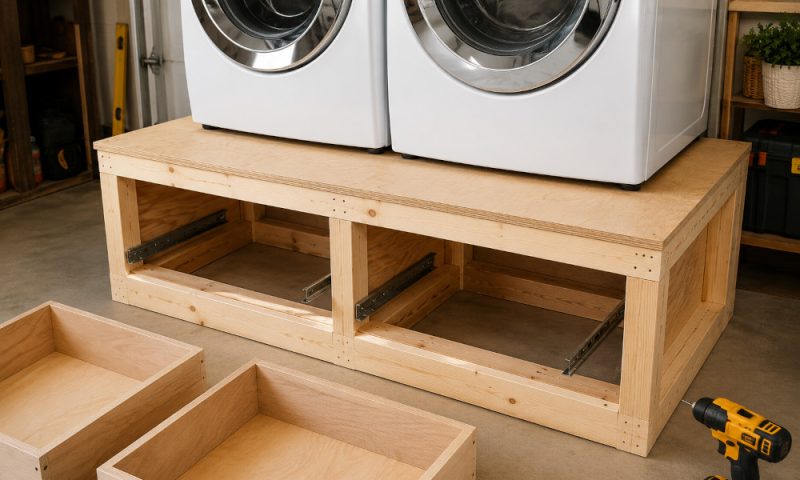
I used pressure-treated 2×4 lumber to build a rectangular frame with several cross-braces spaced throughout the center. At first, I wondered if I was overbuilding it, but after seeing how much a washer moves during the spin cycle, I was glad I added the extra support.
One lesson I learned early was that appearance comes later. A perfectly painted pedestal won’t matter if the frame flexes under hundreds of pounds of moving weight.
After assembling the frame, I checked every corner with a carpenter’s square before tightening the screws completely.
How Much Weight Should a Laundry Pedestal Support?
A front-load washer can easily weigh 200 pounds before adding water or clothes. Pair it with a dryer, and you’re supporting well over 400 pounds during normal use.
During high-speed spin cycles, those forces increase significantly because of vibration and movement.
That’s why I recommend:
- Using 3/4-inch plywood instead of thinner sheets.
- Installing multiple cross braces.
- Choosing structural wood screws instead of drywall screws.
- Avoiding particleboard for the main platform.
Building a stronger frame costs only a little more, but it provides much greater peace of mind.
Step 3: Install the Top Platform
Once the frame was complete, I attached a sheet of 3/4-inch plywood using construction adhesive and structural screws.
The platform immediately felt solid.
Before painting, I rounded over the sharp edges with sandpaper. It only took a few extra minutes, but it gave the finished pedestal a cleaner appearance and eliminated rough corners that could snag clothing.
I also filled the screw holes with wood filler so the painted finish would look smoother once everything dried.
Step 4: Add Built-In Storage
Originally, I planned to build nothing more than a simple washer riser.
Then I realized all the unused space underneath could be used for storage.
Adding drawers probably doubled the project’s usefulness.
Mine now holds:
- Laundry detergent
- Dryer sheets
- Stain removers
- Cleaning cloths
- Extra towels
- Replacement filters
- Appliance manuals
- Small cleaning tools
Everything stays hidden but easy to reach, and my laundry room feels noticeably less cluttered.
One small mistake I made was installing one drawer slide slightly crooked the first time. The drawer kept sticking until I removed the hardware and realigned it. Spending a few extra minutes checking alignment saved a lot of frustration later.
Step 5: Paint and Protect the Wood
Laundry rooms may not seem especially damp, but humidity can take a toll on unfinished wood over time. That’s especially true in Marietta, where warm, humid summers can cause exposed wood to absorb moisture.
After filling the screw holes and sanding the entire pedestal smooth, I applied two coats of moisture-resistant semi-gloss paint. If you prefer a natural wood look, a quality stain followed by polyurethane offers excellent protection as well.
The finish isn’t just about appearance. It helps prevent moisture damage and makes the surface much easier to wipe clean.
Step 6: Position the Washer and Dryer
Moving appliances was easily the hardest part of the project.
A washer and dryer are simply too heavy for one person to lift safely, so I asked a friend to help. Once both machines were in place, I adjusted the leveling feet until they sat firmly on the platform without rocking.
Before reconnecting everything, I double-checked that the water lines, drain hose, electrical cord, and dryer vent all had enough clearance behind the pedestal.
Finally, I ran an empty wash cycle to ensure everything remained stable during the spin cycle.
Common Mistakes to Avoid
Using Materials That Aren’t Strong Enough
Thin plywood and lightweight framing may lower the cost, but they also reduce the pedestal’s strength. Washers create significant vibration, so investing in quality materials is worthwhile.
Forgetting Cross Braces
Cross braces distribute weight evenly across the frame. Skipping them can lead to sagging or movement over time.
Ignoring Hose and Vent Clearance
Leave enough room behind the appliances for water hoses, drain lines, electrical cords, and dryer vents. Trying to force appliances into a tight space can damage connections.
Rushing Measurements
I measured everything twice before making the first cut. That extra time saved me from wasting lumber and rebuilding part of the frame.
Troubleshooting Common Problems
The Pedestal Shakes During the Spin Cycle
First, make sure the washer’s leveling feet are adjusted correctly. Then inspect the pedestal for loose screws or uneven flooring. In many cases, the pedestal isn’t the problem at all.
The Drawers Don’t Slide Smoothly
Check that the drawer slides are installed level and parallel. Even a slight misalignment can cause the drawers to bind.
The Washer Vibrates More Than Expected
If the platform feels solid but the machine still shakes excessively, the issue could be worn suspension rods, shock absorbers, or another internal component.
The same idea applies to your dryer. If it suddenly starts taking two cycles to dry a normal load, the pedestal usually isn’t the culprit. Restricted airflow, a clogged dryer vent, or worn heating components are much more common causes. Learn more about why a slow dryer takes two cycles and what’s actually causing it before assuming the problem is related to your DIY project.
That’s a repair I wouldn’t attempt without the proper experience. If you need appliance repair in Marietta, Appliance EMT has earned a solid reputation for diagnosing washer and dryer problems that go beyond what a typical DIY fix can address.
Safety Tips
Working with heavy appliances deserves a little extra caution.
I recommend:
- Building on a flat, solid floor.
- Using structural wood screws instead of drywall screws.
- Confirming every joint is tight before adding weight.
- Asking someone to help move the appliances.
- Testing the pedestal with an empty wash cycle before regular use.
- Wearing safety glasses and hearing protection while cutting lumber.
Why This Project Works Well in Marietta Homes
Many homes around Marietta, especially those built in the 1980s and 1990s, have compact laundry rooms tucked into hallways, mudrooms, garages, or utility closets.
In spaces like these, adding more cabinets isn’t always possible. Building upward is often the smarter solution.
The built-in drawers gave me storage without taking up additional floor space, and raising the appliances made the room feel much more comfortable to use every week.
Marietta’s humid climate is another reason I recommend sealing every exposed piece of wood. A quality finish helps protect the pedestal from moisture and keeps it looking good for years.
What I Learned After Using It
Several months later, I can honestly say this project has held up better than I expected.
The biggest surprise wasn’t how much easier loading the washer became. It was how much cleaner the laundry room stayed once everything had its own place.
If I were building another pedestal, I’d make the drawers just a little deeper to hold larger detergent containers. Otherwise, I wouldn’t change much.
Sometimes the simplest DIY projects end up making the biggest difference in everyday life.
Frequently Asked Questions
How tall should a DIY laundry pedestal be?
I found that 10 to 14 inches offers the best balance between comfort and stability. Mine is 12 inches tall, which feels just right.
Can one pedestal support both a washer and dryer?
Yes. As long as it’s properly reinforced with quality lumber, cross braces, and 3/4-inch plywood, one platform can safely support both appliances.
Is this a good beginner woodworking project?
I’d say yes if you’re comfortable using basic power tools and measuring carefully. None of the cuts are particularly difficult, but accuracy matters.
Is it worth adding storage drawers?
Absolutely. The drawers turned what could have been a simple washer stand into one of the most useful storage upgrades in my laundry room.
How much money can you save?
Factory-made washer pedestals often cost several hundred dollars, especially when purchased for both appliances. I completed mine for about $180 using quality materials, leaving room in the budget for heavy-duty drawer slides and paint.
Is a DIY Laundry Pedestal Worth Building?
Building this DIY laundry pedestal turned out to be far more rewarding than I expected. It solved several everyday problems at once by raising the washer and dryer to a more comfortable height, adding hidden storage, and making the entire laundry room feel more organized.
The project isn’t complicated, but taking your time with measurements, using sturdy materials, and reinforcing the frame makes all the difference. Those extra steps create a platform that’s built to handle years of regular use.
If you’ve been considering a homemade washer stand or raised laundry platform, I’d encourage you to give it a try. With a weekend of work and a modest budget, you can create a practical upgrade that improves both the look and function of your laundry room every time you do a load of laundry.
About the Author