After living in more than eight countries, I have learned that climate affects nearly every part of maintaining a home.
Now that I live with my family in Metro Atlanta, humidity is one of the biggest home-care challenges I watch. During the warmer months, bathrooms stay damp longer, towels dry more slowly, and certain rooms can feel stuffy even when the air conditioner is running.
Our summer storms can also reveal problems that were easy to miss during a dry week. A slow leak beneath a sink, a blocked exhaust fan, or water collecting near the foundation can become a much bigger concern when the air is already holding plenty of moisture.
As a busy mom, I do not have time to treat every household problem like a major renovation. Instead, I rely on a manageable list of home projects for Atlanta humidity that help me improve airflow, monitor moisture, and notice small problems before they spread.
I have found that many Small home Changes That Make a Big Difference begin with paying closer attention to the parts of the house we usually overlook.
Here are the six small home projects for Atlanta Humidity I prioritize before and during Atlanta’s humid months.
Table of Contents
1. I Clean and Test Our Bathroom Exhaust Fans
The bathroom is usually the first place where I notice excess moisture. A foggy mirror immediately after a shower is normal in our home. What concerns me is a room that still feels damp much later.
When I do it
I clean the exhaust-fan cover in early spring, usually in March or April, before Atlanta’s humidity becomes more intense.
I also check it whenever:
- The mirror stays fogged longer than usual
- The room smells damp
- The fan sounds louder
- Dust is visible on the grille
- The bathroom takes longer to dry
How often I do it
I inspect the fan cover once a month during warm weather.
I give it a more thorough cleaning every three to six months. A bathroom used by several family members may need attention more often than a guest bathroom.

How I do it
I turn off the fan and remove the cover according to the manufacturer’s instructions. Most covers pull down slightly and are held in place with metal clips.
I wash the removable grille with warm water and dish soap. After it dries, I use a vacuum attachment to remove accessible dust around the fan housing.
I do not spray cleaner into the motor or touch the wiring.
Once the cover is reinstalled, I hold a square of toilet paper near the grille. I want to see the paper move toward the fan, which tells me that it is pulling air.
I also remind my family to run the fan during showers and leave it on for a short period afterward.
When I call a professional
I call for help if the fan:
- Does not pull air
- Makes grinding or rattling noises
- Stops working
- Appears to vent into the attic
- Leaves the room damp even after cleaning
2. I Monitor Humidity in the Rooms That Feel Damp
For years, I judged humidity by how a room felt. The problem is that “stuffy” and “damp” are difficult to measure.
Now I use small digital humidity gauges, also called hygrometers, in the rooms that concern me most.
When I do it
I start monitoring more closely in late spring and continue through early fall.
I pay extra attention:
- After several rainy days
- When the air conditioner has not run much
- After back-to-back showers
- When towels take longer to dry
- When a room develops a musty smell
- After a plumbing or roof leak
How often I do it
I glance at the humidity reading a few times each week during Atlanta’s warm and humid months.
I check it daily when a room has had a recent moisture problem or when we have experienced several days of heavy rain.
I test or replace the batteries twice a year.
How I do it
I place the gauge on a shelf where air can circulate around it.
I avoid placing it directly beside:
- A shower
- An exterior door
- An HVAC vent
- A humidifier
- A dehumidifier
- An open window
Those locations can create readings that do not represent the entire room.
I pay more attention to patterns than to one temporary increase. A spike during a shower is different from a room that stays humid for hours.
When I call a professional
A humidity gauge can identify a problem, but it cannot explain the cause.
I call a qualified professional when high humidity continues despite normal ventilation or when I also notice:
- Recurring condensation
- Water stains
- Peeling paint
- Soft drywall
- Mold growth
- A persistent musty odor
- Damp flooring or carpet
3. I Empty and Inspect the Cabinets Under Our Sinks
The cabinets beneath our sinks collect cleaning supplies, trash bags, sponges, dishwasher tablets, and products I forgot we owned.
That clutter can hide a slow leak.
When I do it
I inspect these cabinets before the humid season begins and after any plumbing issue.
I also check immediately when I notice:
- A musty smell
- Damp cleaning products
- Discoloration
- Warped shelf liner
- Water near the dishwasher
- A dripping faucet or pipe
How often I do it
I perform a quick visual check once a month.
Every three to six months, I remove everything and inspect the entire cabinet.
In a busy family kitchen, the cabinet under the sink may need checking more often because items are constantly being moved in and out.
How I do it
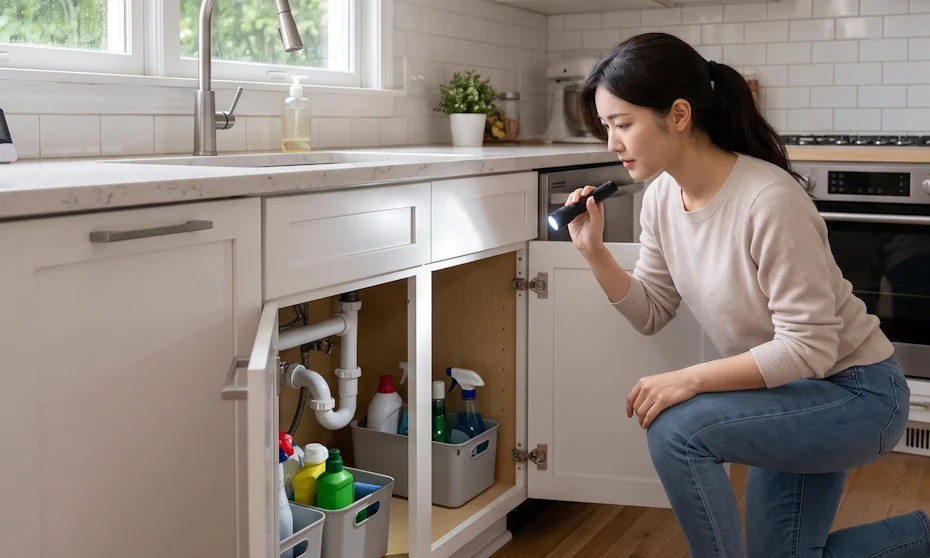
I empty the cabinet and use a flashlight to inspect:
- Pipe connections
- The cabinet floor
- The back wall
- The corners
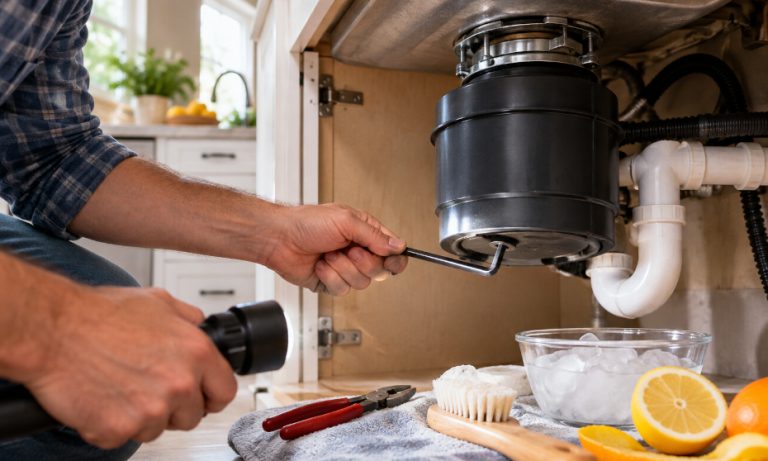
- The area around the garbage disposal
- The water lines leading to nearby appliances
I look for droplets, staining, rust, swollen wood, peeling material, or an odor that returns after cleaning.
Once I know the area is dry, I place commonly used products in removable bins. I leave the pipes visible instead of packing supplies around them.
I also use a shallow waterproof tray and a battery-powered leak alarm. The tray makes small amounts of water easier to see, while the alarm can warn me before a leak spreads.
When I call a professional
I call a plumber when I find:
- Active dripping
- A damaged pipe
- A loose connection I cannot safely tighten
- Swollen cabinet material
- Moisture that returns
- Water coming from inside a wall
- Evidence of damage beneath the cabinet
A waterproof tray should make a leak easier to notice. It should never be used to ignore one.

4. I Clear Furniture and Household Items Away From Air Vents
Air vents rarely become blocked all at once. It happens gradually.
A storage basket moves in front of a return grille. A sofa gets pushed farther against the wall. Curtains hang over a vent. Children leave toys on a floor register.
When I do it
I check the vents before we begin using the air conditioner heavily.
I also walk through the house when:
- One room feels warmer than the others
- Airflow seems weak
- Furniture has been rearranged
- Seasonal decorations have been added
- New curtains or rugs have been installed
How often I do it
I check supply vents and return-air grilles once a month.
I also inspect them after cleaning, reorganizing, or moving furniture.
During the summer, I check the HVAC filter monthly and replace it according to the filter and system manufacturer’s instructions.
How I do it
I locate every supply vent and return grille in the room.
Supply vents push cooled or heated air into the room. Return grilles pull air back toward the HVAC system. Both need open space.
I move away:
- Furniture
- Curtains
- Rugs
- Baskets
- Toys
- Laundry
- Decorative items
I vacuum visible dust from vent covers and make sure adjustable registers are open unless there is a specific reason they should be closed.
I do not close multiple vents in an attempt to force more air into another room. That can create problems for some HVAC systems.
When I call a professional
I contact an HVAC technician if a room still has weak airflow after vents are cleared and the filter has been checked.
Other warning signs include:
- Unusual system noises
- Ice around HVAC components
- Repeated system cycling
- Warm air from a cooling vent
- A room that remains much warmer or more humid than the rest of the home
5. I Clean the Range-Hood Filter
I cook regularly, so grease and steam are part of daily life in my kitchen.
The range-hood filter often looks cleaner from below than it actually is. Once I remove it, I can usually see a sticky layer that has collected above the stove.
When I do it
I inspect the filter before the humid season and anytime the kitchen seems to hold cooking odors longer than usual.
I also check it after periods of frequent frying, high-heat cooking, or large family meals.
How often I do it
I inspect the filter once a month.
Because my family cooks often, I clean our washable metal filter every one to three months.
A household that cooks less frequently may not need to clean it as often. Disposable or charcoal filters should be replaced according to the manufacturer’s instructions.
How I do it
I first confirm whether the filter is washable.
For a washable metal filter, I:
- Turn off the range hood.
- Remove the filter according to its instructions.
- Soak it in hot water and grease-cutting dish soap.
- Scrub it gently with a soft brush.
- Rinse it thoroughly.
- Allow it to dry completely.
- Reinstall it only after no water remains inside the mesh.
I avoid abrasive tools that could damage the filter.
I also wipe the accessible exterior surfaces of the hood, but I do not spray liquid into the fan, controls, lights, or electrical openings.
When I call a professional
I arrange an inspection if:
- The fan does not run
- The hood makes unusual noises
- Airflow remains weak after cleaning
- Grease is collecting inside inaccessible areas
- The hood does not appear to exhaust air correctly
Related article: How to Maintain your Home Appliances Before they Break Down
6. I Inspect Where Rainwater Collects Outside
Not every moisture problem begins indoors.
Metro Atlanta storms can drop a large amount of rain in a short period. I have learned to check where that water goes instead of assuming the gutters and downspouts are handling it properly.
When I do it
I inspect the exterior of our home after heavy storms.
I also complete a more thorough walkaround in:
- Early spring
- Late summer
- Fall, after leaves begin dropping
How often I do it
During rainy periods, I check drainage areas after each major storm.
During drier periods, I inspect the outside of the house at least once a month.
I check door weatherstripping twice a year and replace it when it becomes loose, flattened, cracked, or damaged.
How I do it
I walk around the house and look for:
- Overflowing gutters
- Water pooling near the foundation
- Downspouts releasing water beside the house
- Soil or mulch touching the siding
- Wet leaves against the foundation
- Sprinklers spraying the walls
- Water gathering near exterior doors
- Loose or damaged weatherstripping
From the ground, I can safely remove light debris, reposition a removable downspout extension, or replace basic door weatherstripping.
I do not climb onto a wet roof or tall ladder after a storm.
I also avoid making major grading or drainage changes without understanding where the redirected water will go. Moving water away from one part of the house can accidentally send it toward another problem area.
When I call a professional
I contact a drainage, roofing, foundation, or water-remediation professional when I see:
- Water entering the home
- Repeated pooling beside the foundation
- Interior wall stains
- Damp basement or crawl-space areas
- Damaged gutters or downspouts
- Cracks that appear to be worsening
- A musty smell that returns after storms

The Schedule I Follow During Atlanta’s Humid Season
I begin my main humidity-related checks in March or April.
During the warmer months, my basic schedule looks like this:
- Weekly: Glance at humidity readings and look for damp or musty areas.
- Monthly: Check bathroom fans, under-sink cabinets, air vents, HVAC filters, range-hood filters, and exterior drainage.
- After major storms: Walk around the house and inspect where water is collecting.
- Every three to six months: Deep-clean exhaust-fan covers and fully empty under-sink cabinets.
- Twice a year: Check weatherstripping, humidity-gauge batteries, and seasonal maintenance reminders.
- Immediately: Investigate unusual odors, stains, condensation, leaks, weak airflow, or visible moisture.
This schedule is a starting point. A heavily used bathroom, a home with pets, or a kitchen where the family cooks daily may need more frequent attention.
What Atlanta Humidity Has Taught Me
The biggest lesson I have learned is not to cover up the signs of moisture.
A scented spray may hide a musty odor. A dehumidifier may lower the reading in one room. Wiping condensation from a window may make it look better temporarily.
None of those actions explains where the moisture is coming from.
I start by asking two questions:
- Where is the moisture entering or being produced?
- Why is it not leaving the area?
Sometimes the solution is simple. I may need to clean a dusty fan cover, move a basket away from a return grille, or clear unnecessary products from beneath a sink.
Other times, the inspection shows me that I need an HVAC technician, plumber, roofer, electrician, or drainage professional.
Knowing when a project is manageable and when it is beyond my experience is part of being a responsible DIY homeowner.
Final Thoughts
Living around the world taught me to pay attention to the way climate affects daily life. Living in Metro Atlanta has taught me to notice moisture before it becomes damage.
I do not complete all six projects on the same weekend. I usually start with one room or one problem area.
The projects themselves are not dramatic. Most guests will never notice that I cleaned a fan cover, moved furniture away from a vent, or checked the cabinet beneath the sink.
My family notices the results. The bathrooms dry more quickly, the kitchen feels fresher, air moves more evenly, and I have fewer hidden areas to worry about when the next Atlanta storm arrives.
Frequently Asked Questions
When should I begin humidity-related home maintenance in Atlanta?
I begin my main inspections in March or April, before Metro Atlanta’s warmest and most humid weather arrives. I continue monthly checks throughout summer and inspect exterior drainage after major storms.
How often should I check the humidity inside my home?
I check humidity readings several times a week during warm or rainy weather. I monitor them daily when a room has recently experienced a leak, musty odor, condensation problem, or other sign of excess moisture.
What indoor humidity level is too high?
A temporary rise after cooking or showering is normal. I become more concerned when a room stays humid for several hours or repeatedly develops condensation, damp odors, water stains, or visible moisture.
Will a dehumidifier fix a moisture problem?
A dehumidifier can remove moisture from the air, but it will not repair a plumbing leak, blocked exhaust fan, roof problem, damaged HVAC system, or poor exterior drainage. I use humidity readings as a clue and investigate the original source of the moisture.
How often should I clean a bathroom exhaust fan?
I inspect bathroom exhaust-fan covers monthly during warm weather and clean them thoroughly every three to six months. A bathroom used by several family members may require more frequent cleaning.
How often should I inspect the cabinets beneath my sinks?
I perform a quick visual check once a month and completely empty each cabinet every three to six months. I inspect the area immediately if I smell something musty, notice damp supplies, or see discoloration.
When is an Atlanta humidity problem no longer a DIY project?
I call a professional when I find an active leak, recurring mold, water entering the house, soft drywall, electrical concerns, damaged plumbing, persistent high humidity, or moisture that returns after basic cleaning and ventilation improvements.
About the Author