I’ve worked on homes across Gwinnett County for many years, and if there’s one complaint I hear over and over again, it’s about squeaky floors and doors. A single creak might seem harmless at first, but once you start noticing it every morning or every time someone walks down the hallway, it’s hard to ignore.
The good news is that most squeaks have straightforward solutions. In my experience, they’re usually caused by normal wear, seasonal humidity, or hardware that has simply loosened over time. Rarely do they point to serious structural problems.
Whether you own a decades-old ranch near Downtown Duluth or a newer home around Sugarloaf, understanding what’s causing the noise is the first step toward fixing it.
Key Takeaways
- Most floor squeaks are caused by movement between the subfloor and floor joists rather than structural damage.
- Cleaning and lubricating door hinges solves many squeaky doors in just a few minutes.
- Duluth’s humid summers and changing seasons contribute to wood expansion and contraction.
- Simple tools like trim-head screws, powdered graphite, and wood glue can eliminate many common squeaks.
- Knowing when to stop a DIY repair and call a professional can save time and prevent expensive mistakes.
Why Floors and Doors Start Squeaking
Before grabbing your toolbox, it helps to know what’s actually making the noise.
Wood is constantly responding to changes in temperature and humidity. As it absorbs moisture, it expands. When it dries out, it shrinks. That movement may be tiny, but over several years it can loosen fasteners, create friction between floorboards, or cause door hardware to wear.
When I’m tracking down a squeak during a service call, the problem usually falls into one of these categories:
- The subfloor is rubbing against a floor joist.
- A nail or screw has worked itself loose.
- Door hinges have collected dirt or dried-out lubricant.
I’ve lost count of how many homeowners assumed they had a serious foundation issue, only to discover that tightening a few screws or adding lubricant solved the problem. That’s why I always recommend identifying the exact source before assuming the worst.
While you’re inspecting your home for squeaks, don’t overlook nearby appliances. A leaking dishwasher or washing machine can introduce moisture that affects surrounding flooring over time. Following a regular maintenance routine helps reduce the risk of unexpected breakdowns and can even prevent damage to nearby floors. Here are some practical tips for maintaining your home appliances before they break down.
How to Fix a Squeaky Floor
1. Pinpoint the Exact Location
Finding the squeak is often the hardest part.
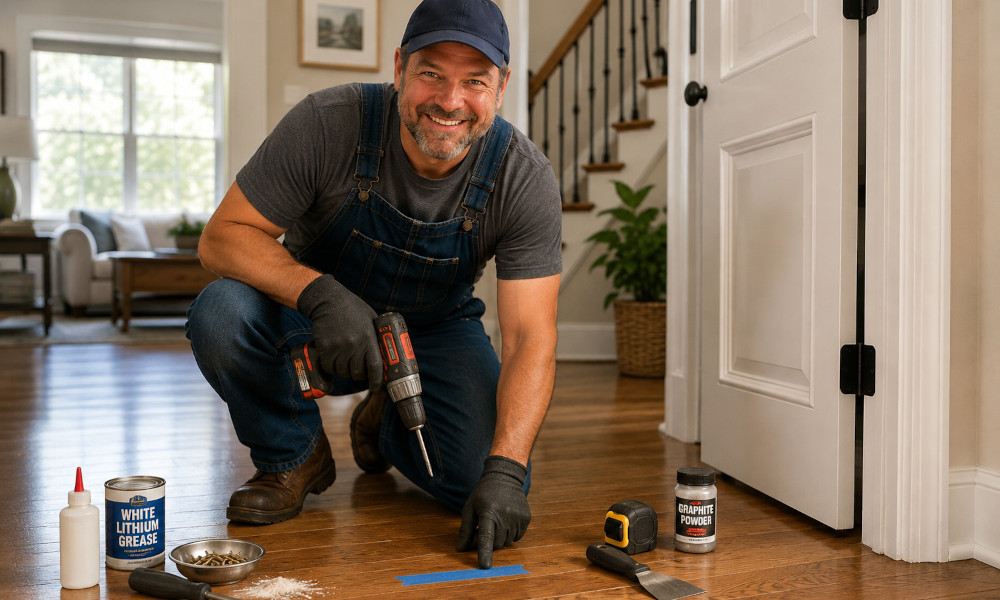
Walk slowly across the floor while someone else listens from below, if possible. Once you hear the noise, place a piece of painter’s tape directly over the spot. Being off by just a couple of inches can mean fastening the wrong area and leaving the squeak exactly where it was.
I’ve seen homeowners install several screws around a noisy section without ever hitting the real problem. Spending an extra minute locating the source usually saves much more time later.
2. Reduce Friction Between Floorboards
If your hardwood floor has small gaps between boards, friction may be causing the noise.
Sprinkle talcum powder or powdered graphite into the seams and gently work it into the joints with a putty knife or soft cloth. This simple fix often quiets minor squeaks without drilling or removing flooring.
It isn’t a permanent solution for every home, but I’ve seen it make an immediate difference in older hardwood floors that simply needed a little lubrication.
3. Secure the Subfloor from Below
If you have access through a crawl space or unfinished basement, this is usually my preferred repair method.
Inspect the underside of the squeaky area for small gaps between the joist and subfloor. Driving subfloor screws into the flooring or installing a thin shim coated with wood glue can eliminate movement without disturbing the finished flooring above.
The key is to avoid forcing a shim into a large gap. I’ve seen well-intentioned homeowners hammer oversized shims into place, only to create a raised floor section that caused even more problems.
While you’re inspecting the area beneath the floor, it’s also a good time to check for signs of water damage around nearby plumbing or appliances. I’ve occasionally found that what homeowners thought was a floor problem was actually caused by a leaking dishwasher or washing machine. If you notice moisture or suspect an appliance issue, it’s worth scheduling same day appliance repair in Duluth, GA before the damage spreads and leads to more costly floor repairs.
4. Install Trim-Head Screws from Above
Sometimes there’s no access beneath the floor.
In those situations, trim-head screws can permanently eliminate many squeaks when they’re driven directly into the joist. Pre-drill the hole first and countersink the screw so it sits just below the finished surface, then fill the hole with matching wood filler.
Take your time locating the joist before drilling. A misplaced screw won’t solve the squeak, and unnecessary holes only create more repair work.
How to Fix a Squeaky Door
1. Clean and Lubricate the Hinges
This is the first thing I check whenever someone tells me their door squeaks.
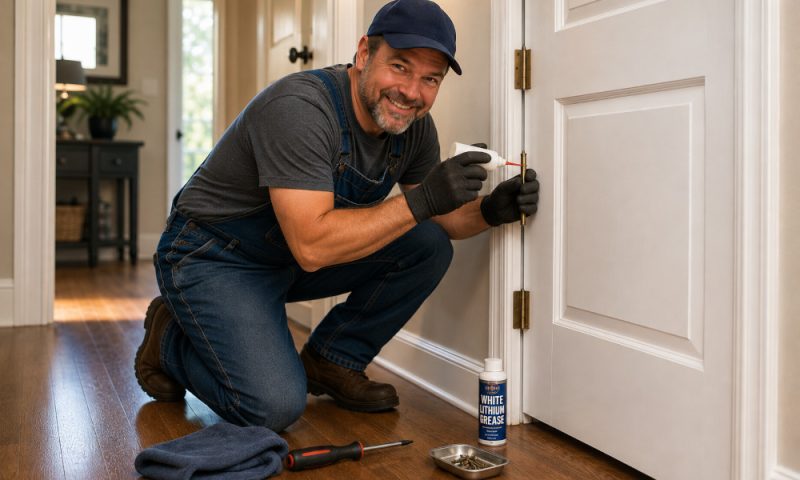
Pull the hinge pin out, wipe away any dirt or old grease, and apply a small amount of white lithium grease or household oil before reinstalling it.
Many homeowners immediately reach for WD-40, but I’ve found it works best as a cleaner rather than a long-term lubricant. It can temporarily quiet the noise, but it also attracts dust over time. A quality grease generally lasts much longer.
2. Tighten Loose Hinge Screws
Loose hinge screws can create just as much noise as dry hinges.
Check each screw with a screwdriver instead of assuming they’re tight. If a screw continues spinning without tightening, the hole has probably become stripped.
One of the easiest repairs is to coat a wooden golf tee or matchstick with wood glue, insert it into the hole, trim it flush, and reinstall the screw after the glue dries. It’s a simple trick that’s saved countless door frames from larger repairs.
3. Inspect the Strike Plate
If lubricating the hinges doesn’t help, look at how the door closes.
Sometimes the edge of the latch rubs against the strike plate every time the door moves. A few careful passes with a metal file can remove just enough material to eliminate the friction.
This isn’t something I adjust immediately. I always confirm the hinges are working properly first because they’re responsible for most squeaky door problems.
Tools You’ll Need
Having the right tools nearby makes these repairs much easier.
- Painter’s tape for marking the exact squeak location
- Talcum powder or powdered graphite
- Cordless drill with a countersink bit
- Trim-head screws (2 to 2½ inches)
- White lithium grease or household oil
- Wood glue
- Thin wood shims
- Putty knife
- Wood filler for visible screw holes
You probably already have most of these in your garage or toolbox. If not, they’re inexpensive and useful for many other household repairs.
Lessons From the Job
One repair from a few years ago still stands out.
A homeowner near Sugarloaf Country Club called because the hallway outside the bedrooms squeaked loudly every morning. She was convinced the floor needed to be replaced.
After checking underneath the crawl space, I found a small section where the subfloor had separated slightly from one joist. A couple of carefully placed screws and a glued shim eliminated the squeak in less than an hour.
As I packed up my tools, she mentioned that her dishwasher had been leaking during the previous week and asked if I could take a look. After a quick inspection, it was obvious the problem was inside the appliance rather than the plumbing or flooring.
Instead of guessing, I recommended Appliance EMT, a local company I’ve confidently referred homeowners to for appliance problems beyond my expertise. They specialize in same-day appliance repair, and their technician quickly diagnosed the leaking dishwasher and had it working again that afternoon. More importantly, the homeowner avoided the water damage that can happen when a small leak is left unattended.
That visit reinforced something I tell homeowners regularly. Simple maintenance projects are often perfect for DIY, but repairs involving appliances, plumbing, electrical systems, or significant structural concerns are usually worth leaving to the professionals. Knowing where your expertise ends can prevent much bigger repair bills later.
Frequently Asked Questions
Why does my floor squeak more during certain seasons?
Wood absorbs and releases moisture throughout the year. During Duluth’s humid summers, floorboards expand and can rub against one another or their fasteners. As humidity changes, the amount of noise often changes as well.
Can carpeted floors squeak too?
Absolutely. Carpet often hides the source of the problem, but the squeak usually comes from movement between the subfloor and joists underneath. In many cases, the repair is the same as it would be for hardwood flooring.
Can a squeaky floor indicate structural damage?
It’s uncommon. Most squeaks result from normal settling, loose fasteners, or wood movement.
However, if you also notice sagging floors, wide cracks in walls, bouncing sections of flooring, or doors that suddenly won’t close properly, it’s a good idea to have the home inspected by a qualified professional.
Is WD-40 the best product for squeaky hinges?
WD-40 works well for cleaning old residue and freeing stuck hardware, but I don’t rely on it as a long-term lubricant. White lithium grease or household oil generally keeps hinges quiet much longer.
Do I need to remove my flooring to stop a squeak?
Almost never.
Most squeaks can be fixed by lubricating floorboards, tightening loose fasteners, or making repairs from below through a crawl space or unfinished basement. Removing finished flooring should usually be the last option after easier solutions have been ruled out.
Keep Your Home Quiet and Comfortable
Squeaky floors and doors can certainly be annoying, but they’re usually among the easier home maintenance issues to solve.
Over the years, I’ve found that taking a few extra minutes to identify exactly where the noise is coming from makes all the difference. Whether the solution is powdered graphite between hardwood boards, a properly placed trim-head screw, or fresh lubricant on a hinge, small repairs often eliminate problems that homeowners have lived with for years.
Regular maintenance also goes a long way toward preventing future squeaks. Keeping indoor humidity at a consistent level, tightening loose hardware before it worsens, and addressing small issues early can help your floors and doors stay quiet year-round.
If you discover signs of structural movement, extensive water damage, or problems involving plumbing, electrical systems, or appliances, don’t hesitate to bring in the appropriate specialist. For everything else, a little patience, the right tools, and a careful approach can keep your Duluth home quieter, more comfortable, and in great condition for years to come.
About the Author