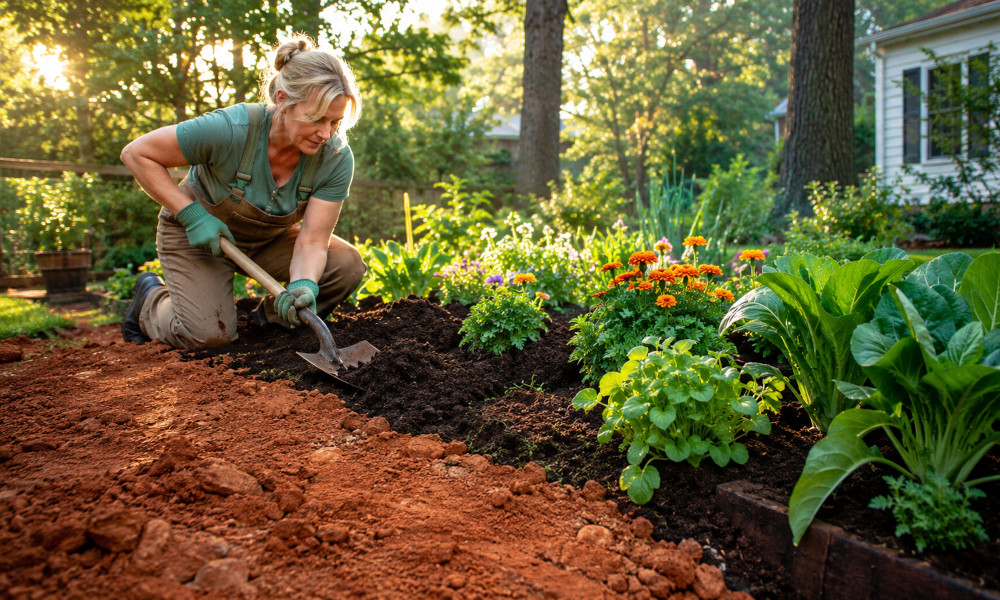
The first time I tried digging a vegetable bed in my Marietta backyard, I thought I had hit buried construction debris. About four inches down, my shovel stopped cold. After trying several other spots, I realized the problem wasn’t buried rubble. It was Georgia red clay.
If you’ve gardened anywhere in the Atlanta metro area, including Alpharetta, Lawrenceville, Cumming, Roswell, or Marietta, you’ve probably encountered the same challenge. Water sits on the surface after a storm, plants struggle to establish roots, and the soil hardens into something that feels more like brick than dirt during summer droughts.
The good news is that Georgia clay soil can be transformed into productive garden soil. It won’t happen overnight, but with the right approach, you can improve drainage, encourage healthier roots, and create growing conditions that support vegetables, flowers, shrubs, and lawns. Many of the same principles that improve soil health can also enhance other Home and Garden projects around your property.
This guide explains why Georgia’s red clay behaves the way it does and how to improve it without wasting time or money on ineffective fixes.
Key Takeaways
- Georgia red clay is dense, slow-draining, and often compacted.
- Organic matter is the most effective long-term solution.
- Soil testing should always be the first step.
- Raised beds provide an immediate alternative in severely compacted areas.
- Working wet clay can make compaction worse.
- Consistent seasonal improvements produce the best long-term results.
Signs You Have Georgia Clay Soil
Not every difficult garden soil is clay, but Georgia’s characteristic red clay has some recognizable traits.
Common signs include:
- Water pooling after rainfall
- Soil sticking heavily to shoes and tools
- Deep cracks appearing during dry weather
- Difficulty digging beyond a few inches
- Plants showing poor growth despite adequate watering
- Hard clumps that become almost rock-like when dry
If several of these symptoms sound familiar, you’re likely dealing with Georgia clay soil.
Why Georgia Red Clay Is So Challenging
One of the most common questions homeowners ask is, “Why is Georgia soil red?”
The color comes from iron oxide, the same mineral responsible for rust. While the color gets most of the attention, the real challenge lies in the soil’s texture.
Much of Georgia sits within the Piedmont region, where ancient weathered rock formations gradually broke down into fine clay particles over millions of years. These particles are extremely small and pack tightly together.
As a result:
- Water moves through the soil slowly.
- Oxygen has difficulty reaching roots.
- Roots struggle to penetrate compacted layers.
- Soil becomes sticky when wet and extremely hard when dry.
Most garden plants perform best in soil that balances moisture retention, drainage, and air circulation. Clay naturally tends to retain water and compact, making improvement necessary for optimal growth.
Why Repeated Tilling Usually Backfires
When gardeners discover compacted soil, the instinct is often to till repeatedly.
I made that mistake during my first few years of gardening.
Initially, tilling seemed to help. The soil looked loose and workable. A few heavy rains later, it settled into an even denser layer than before.
Excessive tilling breaks apart developing soil structure and disrupts beneficial microorganisms. In clay soil, repeated tilling without adding organic matter often creates a cycle of temporary improvement followed by increased compaction.
Instead of constantly tilling, focus on improving soil structure and allowing natural biological processes to continue the work.
How to Fix Georgia Clay Soil
Step 1: Test Your Soil First
Before adding compost, lime, gypsum, or fertilizer, test your soil.
Many Georgia soils naturally fall between a pH of 5.5 and 6.5, although conditions vary widely depending on location and previous land use.
A soil test can reveal:
- pH level
- Nutrient deficiencies
- Organic matter content
- Calcium and magnesium levels
The University of Georgia Cooperative Extension provides affordable soil testing services and amendment recommendations tailored to Georgia conditions.
A simple soil test often prevents unnecessary applications and helps you focus on what your soil actually needs.
Step 2: Add Organic Matter Generously
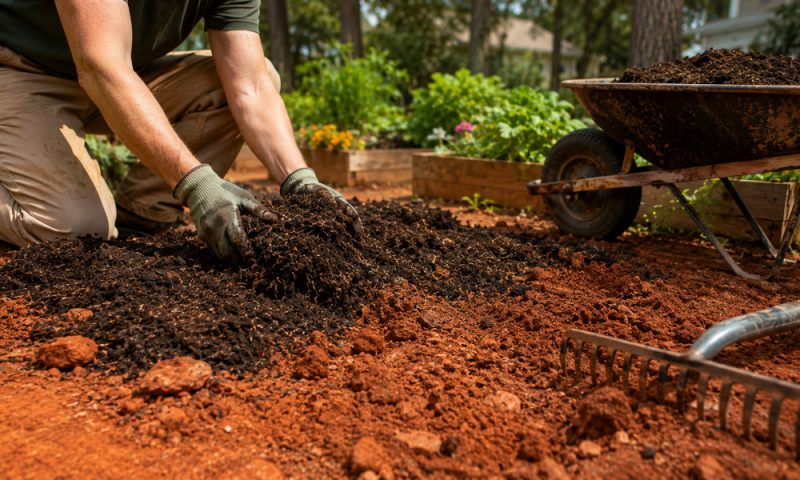
If there is one solution that consistently improves Georgia clay, it’s organic matter.
Organic matter helps:
- Improve drainage
- Increase pore space
- Support beneficial microbes
- Reduce compaction
- Improve root development
Excellent options include:
- Finished compost
- Leaf mold
- Aged pine bark fines
- Well-rotted manure
- Composted yard waste
Spread 3 to 4 inches across the soil surface before incorporation.
Some gardeners also use agricultural gypsum. While gypsum can improve soil structure under certain conditions, it is most effective when a soil test indicates calcium deficiencies or specific soil chemistry issues.
Avoid adding sand alone. Mixing sand into clay without large amounts of organic matter can create a dense, concrete-like structure that is even harder to work.
Step 3: Incorporate Amendments Properly
Work amendments into the top 10 to 12 inches of soil.
This is one of the few situations where deep cultivation is beneficial because you’re integrating organic matter directly into the future root zone.
Timing is important.
The soil should be slightly moist, not saturated and not bone dry. Wet clay smears easily, while extremely dry clay becomes difficult to work effectively.
Step 4: Apply Mulch
Once planting is complete, apply 2 to 3 inches of organic mulch.
Good choices include:
- Pine straw
- Shredded hardwood mulch
- Leaf mulch
Pine straw is especially popular throughout Georgia because it is affordable, widely available, and gradually contributes organic matter as it breaks down.
Mulch helps regulate soil temperature, conserve moisture, suppress weeds, and gradually improve soil structure.
Step 5: Keep Improving Soil Every Year
The biggest mistake many homeowners make is expecting instant results.
Soil improvement is cumulative.
In my own garden, noticeable improvements appeared during the first growing season. By the third year, drainage had improved dramatically, earthworms were abundant, and digging became significantly easier.
Each fall, add 1 to 2 inches of compost as a top dressing.
Over time, the soil becomes darker, looser, and more productive.
When Raised Beds Make More Sense
Sometimes improving native soil isn’t the fastest path to success.
Raised beds are often worth considering when:
- Construction has heavily compacted the soil
- Drainage problems are severe
- Hardpan exists beneath the surface
- You want immediate planting results
For vegetables, raised beds 10 to 18 inches deep generally provide sufficient rooting space for most crops.
A common raised-bed mix consists of:
- 50% high-quality topsoil
- 30% compost
- 20% pine bark fines or similar organic material
I use raised beds for vegetables while continuing to improve native clay around shrubs, trees, and perennial beds.
The combination works exceptionally well. Once your herbs and vegetables are thriving, adding decorative touches like a DIY painted herb garden sign can make the space feel more organized and personalized.
Best Plants for Georgia Clay Soil
While you’re improving the soil, choose plants that naturally tolerate heavier conditions.
Reliable options include:
- Native azaleas
- Oakleaf hydrangeas
- Daylilies
- Black-eyed Susans
- Switchgrass
- Lenten roses (Hellebores)
These plants generally perform well in Georgia landscapes and can help create attractive gardens while long-term soil improvements take effect.
Common Questions About Georgia Red Clay
Is Georgia clay soil good for gardening?
Yes. Although challenging initially, clay soil can become highly productive once amended with organic matter. It also holds nutrients and moisture exceptionally well.
Can vegetables grow in Georgia clay soil?
Absolutely. Tomatoes, peppers, beans, squash, and many other vegetables can thrive once drainage and soil structure improve.
How deep is Georgia clay soil?
Depth varies by location. Some properties have only a few inches of topsoil above clay, while others have clay extending several feet below the surface.
Does grass grow well in Georgia clay?
Many turfgrass varieties grow successfully in Georgia clay. Proper aeration, organic matter additions, and drainage improvements often improve lawn performance.
Does gypsum really help clay soil?
Sometimes. Gypsum can improve structure under specific conditions, but it is not a universal
What Experience Has Taught Me
After years of gardening in Georgia clay, I’ve learned that success comes from patience more than anything else.
The gardeners who achieve the best results aren’t necessarily the ones who spend the most money. They’re the ones who consistently add organic matter year after year.
I’ve also learned that watering mistakes are common in clay soil. Because water infiltrates slowly, it’s easy to overwater without realizing it. A simple soil moisture meter can prevent many plant problems.
Most importantly, never skip the soil test.
One season, I spent months trying to diagnose poor tomato growth before discovering that pH was the real issue. A simple lime application quickly corrected the problem.
Turning Georgia Clay Into Productive Soil
Georgia red clay has a reputation for being difficult, and in many cases, that reputation is deserved. It can be compacted, slow-draining, and frustrating for new gardeners.
The good news is that it is also highly improvable.
Start with a soil test, add generous amounts of organic matter, mulch consistently, and continue building soil year after year. Whether you’re growing vegetables, flowers, shrubs, or turfgrass, those simple practices can dramatically improve results.
Focus on gradual progress instead of quick fixes. Over time, even the toughest Georgia clay can become fertile, productive soil that supports a thriving garden.
About the Author