
Last month, I opened our electricity bill and did a double take. It was noticeably higher than usual, even though our daily routine hadn’t changed. Same number of laundry loads. Same cooking habits. Same everything. That’s when I started wondering if hidden appliance problems around the house were quietly driving up our electricity use.
Naturally, my first thought was that one of our appliances was starting to fail. Instead of replacing anything immediately, I started checking the small things first. Over the years, I’ve learned that most appliances don’t fail suddenly. Most of the time, they slowly become less efficient.
Dust builds up. Filters clog. Door seals wear out. Those hidden appliance problems results to more energy usage, and that extra demand eventually shows up on the power bill. After going through the house and fixing a few overlooked maintenance issues, our electricity bill returned to normal the following month.
Key Takeaways
- Dirty refrigerator coils can dramatically increase energy use.
- Worn door seals let cold air escape and force refrigerators to run longer.
- Blocked dryer vents make drying cycles longer and more expensive.
- Clogged dishwasher filters slow down wash cycles.
- Simple maintenance can lower electricity costs and extend appliance life.
- Key Takeaways
- Hidden Appliance Problems That Waste Electricity
- Dirty Refrigerator Condenser Coils
- Worn Refrigerator Door Seals
- Dryer Vents Full of Lint
- A Dishwasher Filter That’s Never Been Cleaned
- Freezers That Are Packed Too Tight
- A Local Insight I’ve Noticed in Warmer Climates
- What I’ve Learned From Maintaining Appliances at Home
- FAQ: Appliance Issues That Increase Electricity Bills
- How Small Appliance Fixes Can Lower Your Electricity Bill
Hidden Appliance Problems That Waste Electricity
When friends mention their power bill suddenly going up, I always suggest checking a few maintenance issues before assuming the appliance itself is dying.
These are the ones I see most often.
Dirty Refrigerator Condenser Coils
Refrigerators run 24 hours a day, so even small efficiency problems can noticeably increase your electricity bill.
Behind or underneath the refrigerator are condenser coils that release heat from the cooling system. When those coils become covered in dust, pet hair, or kitchen debris, the refrigerator must run longer to stay cold.
I discovered this while doing a deep clean behind our appliances. When I pulled my Kenmore refrigerator away from the wall, the coils were completely covered in dust. That explained why the compressor seemed to run almost constantly.
When refrigerators struggle to run efficiently, they often show other warning signs too. You might notice condensation, unusual noises, or even small puddles on the floor. A clogged defrost drain is a common cause of leaks. If your refrigerator is leaking water, this guide explains common DIY fixes you can try before calling a professional.
Worn Refrigerator Door Seals
One of the hidden appliance problems that’s easy to miss is a worn refrigerator door gasket. The rubber seal around the refrigerator door keeps cold air inside. When it starts to crack or loosen, cold air slowly escapes throughout the day. That means the refrigerator has to cycle more often.
A simple test I like to use is the paper test. Close the door on a piece of paper or a dollar bill. If it slides out easily, the seal probably isn’t doing its job anymore.
Replacing the gasket is usually inexpensive and can extend the appliance’s lifespan.
In my case, I’ve been using a Kenmore refrigerator for years, so I pay close attention to little issues like this before they become bigger problems. When an older fridge starts having multiple issues, such as worn seals, temperature fluctuations, and the compressor running constantly, that’s when I usually stop and ask myself the bigger question: Should I repair or throw out my Kenmore refrigerator and invest in a newer, more energy-efficient model?
Sometimes the repair is simple and worth it. Other times, the electricity savings from a modern fridge make replacement the smarter long-term choice.
Dryer Vents Full of Lint
Dryers are one of the biggest electricity users in most homes. If the vent line becomes partially blocked with lint, the dryer must run longer cycles to remove moisture from clothes.
I discovered this in my own house when towels suddenly started taking two cycles to dry. The issue turned out to be a clogged vent outside the house.
Signs your dryer vent may need cleaning
- Clothes take longer to dry
- The dryer feels extremely hot
- The laundry room gets unusually warm
- Lint collects around the vent opening
Cleaning the vent line once or twice a year can quickly restore the dryer’s efficiency.
A Dishwasher Filter That’s Never Been Cleaned

I’ll admit something here: I didn’t realize dishwashers had filters for years, and it turned out to be one of those hidden appliance problems quietly affecting efficiency.
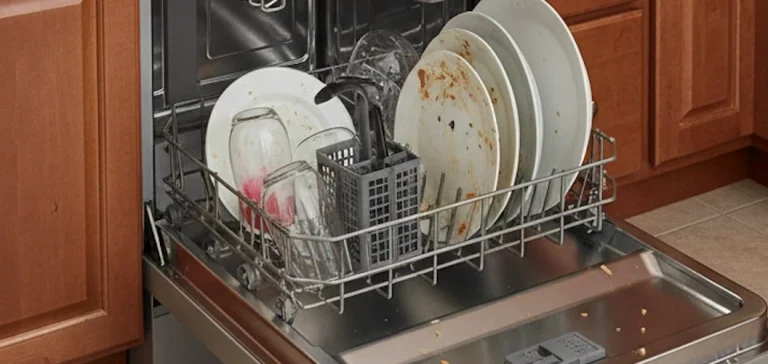
Modern dishwashers usually have a removable filter at the bottom of the tub that traps food particles. Over time, it collects grease and debris, which forces the pump to run longer cycles. It is one of the hidden appliance problems.
One evening, I noticed our dishwasher cycles were getting longer, and the dishes weren’t coming out as clean. When I finally removed the filter, it was completely packed with residue.
My quick maintenance routine
About once a month:
- Remove the bottom rack
- Twist out the filter assembly
- Rinse it under warm water
- Use a soft brush to remove buildup
The whole process takes five minutes.
Freezers That Are Packed Too Tight
A freezer packed too tightly may seem efficient, but it can actually cause cooling problems. Cold air needs to circulate inside the freezer. When food blocks the vents, the appliance has to work harder to maintain temperature.
I learned this after reorganizing our freezer one weekend and noticing the compressor ran less frequently afterward. Now I try to leave a little breathing room between items and avoid stacking food against the back panel.
A Local Insight I’ve Noticed in Warmer Climates
One thing I’ve noticed while talking with friends in warmer parts of the country is that climate can also affect appliance efficiency. In places with higher humidity and warmer temperatures, refrigerators and freezers have to work harder during the summer months.
Every time the door opens, warm and humid air enters the appliance. That moisture eventually condenses or freezes into frost. It’s a small detail, but it’s one reason I’m more careful about checking refrigerator seals and cleaning coils before the hottest part of the year.
Those little preventive steps help solve most hidden appliance problems.
What I’ve Learned From Maintaining Appliances at Home
After maintaining appliances in my own home for years, I’ve noticed a few patterns. Most hidden appliance problems don’t begin with major mechanical failures. They start with neglect.
Here are the mistakes I see most often.
Ignoring small warning signs
Longer wash cycles, unusual noises, or warmer fridge temperatures usually appear before bigger problems.
Forgetting the mechanical parts
People clean the inside of appliances but forget the components that actually make them run.
Assuming replacement is the only option
Many efficiency problems disappear after simple cleaning or maintenance.
Sometimes all it takes is pulling the fridge away from the wall and removing a layer of dust.
FAQ: Appliance Issues That Increase Electricity Bills
Why is my electricity bill suddenly higher?
Often, it’s caused by appliances using more energy due to clogged vents, dirty coils, or worn seals.
Which appliance uses the most electricity?
Refrigerators, dryers, and air conditioners are usually the biggest energy users in most homes.
How often should refrigerator coils be cleaned?
I recommend cleaning them every six months, especially in homes with pets.
Do older appliances use more electricity?
Yes. Older appliances can consume significantly more power than newer energy-efficient models. They could also have hidden appliance problems that reduce their efficiency.
Is appliance maintenance really necessary?
In my experience, regular maintenance helps appliances run more efficiently and last much longer.
How Small Appliance Fixes Can Lower Your Electricity Bill
When electricity bills rise, it’s easy to assume an appliance needs replacement. But many times the problem is much simpler.
Dusty coils, clogged vents, worn seals, and neglected filters quietly make appliances work harder every day. Once I started paying attention to these small maintenance details around my house, I realized how much difference they can make.
Sometimes the easiest way to lower your energy bill isn’t buying something new. It’s just giving the appliances you already own a little attention and solving hidden appliance problems.
About the Author