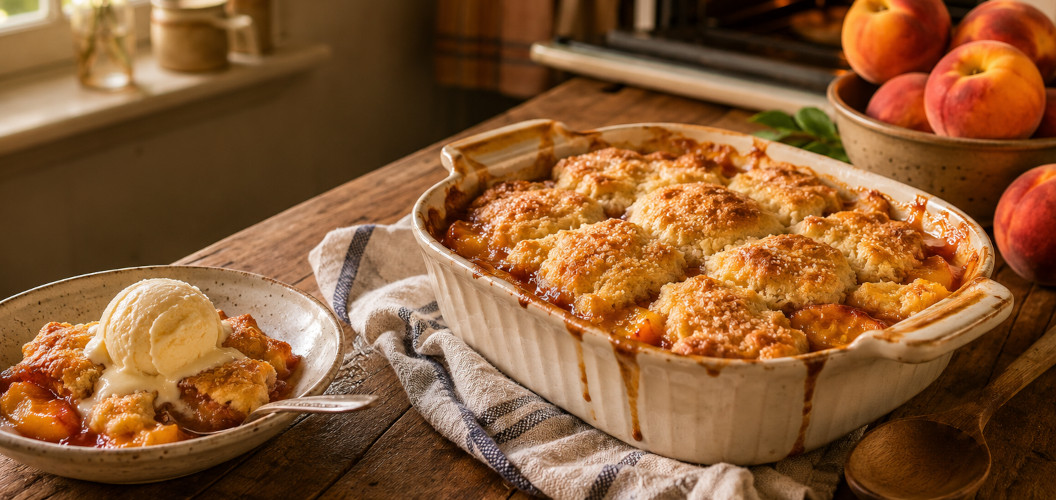
Every July, my kitchen starts smelling like peaches before anything even goes into the oven. It’s become a family tradition. As soon as roadside stands around Buford begin piling fresh Georgia peaches into wooden baskets, I know it’s time to make my grandmother’s peach cobbler.
I’ve probably baked this recipe dozens of times over the years, but one batch still sticks with me.
The peaches were perfectly ripe, the biscuit topping looked beautiful as it went into the oven, and I was already thinking about serving it with vanilla ice cream. Thirty minutes later, I peeked through the oven door and immediately knew something wasn’t right. The edges had browned much faster than usual, but the center still looked pale. By the time the middle finally finished baking, the outside was darker than I wanted.
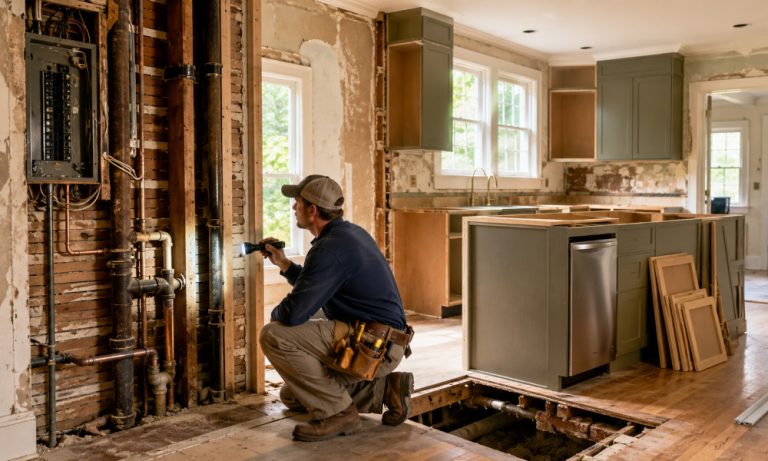
I spent the rest of the afternoon convinced I had somehow ruined my grandmother’s recipe. After a few more disappointing bakes, I realized the recipe wasn’t the problem at all. My oven developed a hot spot, which eventually led me to look into oven repair in Buford after I discovered the appliance was no longer heating evenly.
Once the oven was repaired, the cobbler turned out exactly the way my grandmother taught me years ago.
That experience reminded me that great baking depends on both good ingredients and equipment you can trust.
Whether you’re baking with peaches picked up near Buford, visiting family around Gwinnett County, or simply craving a classic Southern dessert, this is still the peach cobbler recipe I make every summer.
Preparation Time
Prep Time: 30 mins
Cook Time: 40 mins
Total Time: 1 hour 10 mins
Servings and Yield
Servings: 8
Serving Size: 1 generous portion
Ingredients You Will Need for the Peach Cobbler
For the Peach Filling
8 cups sliced fresh Georgia peaches (about 8 to 10 medium peaches)
¾ cup granulated sugar
2 tablespoons cornstarch
1 tablespoon fresh lemon juice
1 teaspoon vanilla extract
½ teaspoon ground cinnamon
Choose peaches that feel slightly soft near the stem and smell sweet before slicing them. If they don’t have much aroma, they’re probably not fully ripe yet.
For the Biscuit Topping
1½ cups all-purpose flour
2 tablespoons granulated sugar, plus extra for sprinkling
2 teaspoons baking powder
½ teaspoon salt
6 tablespoons cold unsalted butter, cubed
¾ cup buttermilk
How I Make My Grandmother’s Cobbler
Step 1: Let the Peaches Rest
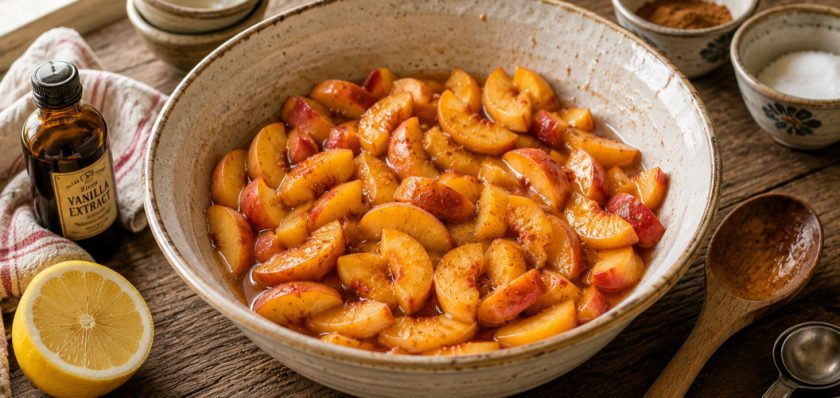
Mix the peaches with the sugar, cornstarch, lemon juice, vanilla, and cinnamon.
Then walk away for about 20 minutes.
It may seem like an unnecessary delay, but this is one of the biggest differences between a good cobbler and a great one. As the peaches release their juices, the cornstarch begins to blend with the liquid, creating a filling that thickens naturally while baking rather than becoming watery.
Step 2: Make the Biscuit Dough
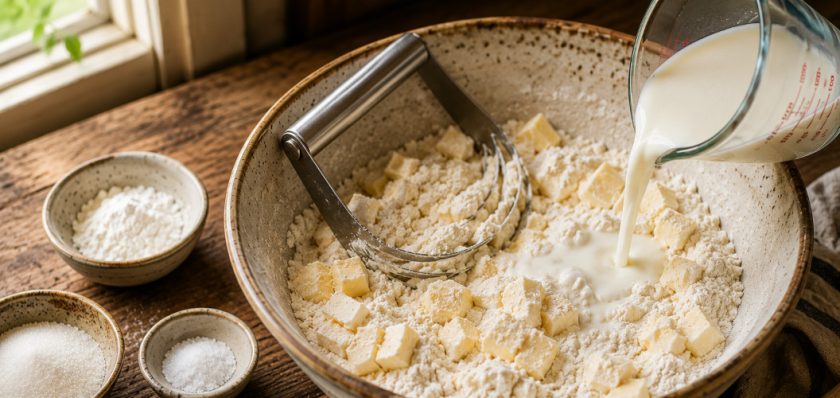
Whisk together the flour, sugar, baking powder, and salt.
Cut the cold butter into the flour until the mixture resembles coarse crumbs. Stir in the buttermilk only until everything comes together.
The dough shouldn’t look perfectly smooth.
In fact, a slightly shaggy dough creates lighter, flakier biscuits after baking.
Step 3: Assemble Everything
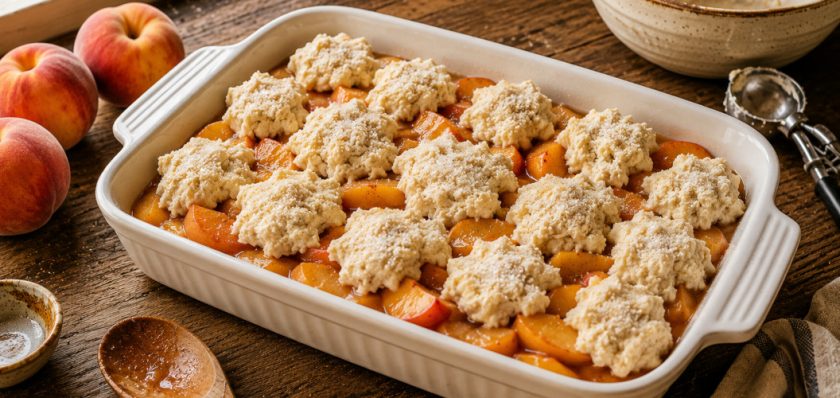
Butter a 9 x 13-inch baking dish or a large cast-iron skillet.
Pour in the peaches.
Drop spoonfuls of biscuit dough over the filling, leaving small gaps so the bubbling fruit can peek through during baking.
Finish with a light sprinkle of sugar for extra crunch.
Step 4: Bake
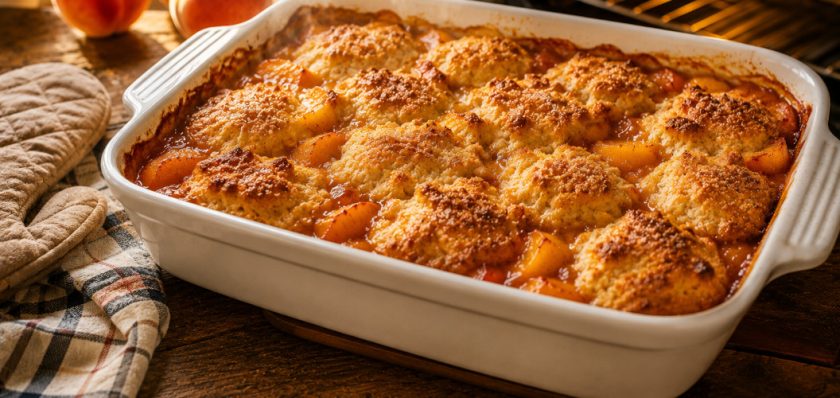
Bake at 375°F for 35 to 40 minutes.
As the cobbler finishes, your kitchen should fill with the smell of butter, cinnamon, and bubbling peaches. The topping should be deep golden with crisp edges, while thick peach juice gently bubbles through the openings.
If the top browns faster than expected, loosely cover it with foil during the final 10 minutes.
Why This Peach Cobbler Has Stayed in My Family
I’ve tasted plenty of peach cobblers over the years. Some were overly sweet. Others buried the fruit beneath a thick cake batter. A few looked beautiful but turned watery after the first serving.
This recipe avoids those problems.
My grandmother always believed that ripe peaches should be the star. She used just enough sugar to enhance their natural sweetness, not cover it up. The biscuit topping bakes into crisp golden pockets with soft, buttery centers, giving every spoonful a perfect balance of fruit and crust.
Even better, the leftovers taste just as good the next day, something that rarely happens with cake-style cobblers.
A Summer Tradition Around Buford
Growing up, buying peaches wasn’t just another grocery trip.
My grandmother preferred stopping at small roadside stands whenever we drove around Buford during peach season. She would gently squeeze each peach, hand me one to smell, and remind me that fragrance tells you more than color ever will.
Those trips became part of the recipe.
Even today, I still find myself judging peaches exactly the way she did.
Georgia’s warm summers produce wonderfully sweet peaches, especially in July. The heat also changes the way I bake. Butter softens quickly, dough becomes sticky, and kitchens warm up fast.
On especially humid afternoons, I chill both my butter and mixing bowl for a few extra minutes before making the topping. That simple habit helps keep the biscuits tender instead of dense.
The Oven Lesson I’ll Never Forget
That uneven cobbler taught me something I wish I’d learned sooner.
Recipes don’t always deserve the blame.
After several disappointing bakes, I finally placed an inexpensive oven thermometer inside the oven. The reading was almost 25 degrees hotter than the temperature on the control panel.
Suddenly, everything made sense.
A neighbor who enjoys fixing things around the house suggested contacting Appliance EMT to look at the uneven baking. The technician found that the heating element and thermostat were no longer maintaining consistent temperatures. Once everything was repaired, my cobblers baked evenly again, with crisp golden tops and perfectly cooked centers.
Now I keep an oven thermometer inside whenever I bake. It’s one of the cheapest kitchen tools I own, and it’s probably saved more desserts than any fancy gadget ever could. Good equipment makes everyday cooking easier, whether you’re baking a cobbler or making simple summer drinks. If you’re looking for another easy way to put your kitchen appliances to work, this guide on making delicious lemonade with a blender is a refreshing recipe to try alongside a warm slice of peach cobbler.
Five Mistakes That Can Ruin Peach Cobbler
Even an easy recipe has a few pitfalls.
- Using peaches before they’re fully ripe.
- Skipping the 20-minute resting time.
- Overmixing the biscuit dough.
- Baking in an oven that’s running hotter or cooler than expected.
- Serving the cobbler immediately instead of letting it cool for about 15 minutes so the filling has time to set.
Frequently Asked Questions
Can I use frozen peaches?
Absolutely. Thaw and drain them first to remove excess moisture. Fresh Georgia peaches still produce the best flavor, but frozen peaches work well during the rest of the year.
Should I peel the peaches?
I usually do because it creates a smoother filling, but leaving a few skins on won’t hurt the recipe if you like a little extra texture.
Can I bake this in a cast-iron skillet?
Yes. Cast iron retains heat beautifully and gives the biscuit topping slightly crispier edges.
Why is my filling still runny?
The peaches may not have rested long enough before baking, or they may have released more juice than expected. Allowing the filling to cool for at least 15 minutes after baking also helps it thicken.
How can I tell if my oven temperature is accurate?
Place an oven thermometer inside while preheating. If the temperature consistently differs from the setting, your oven may need calibration or professional service.
Can I prepare it ahead of time?
Yes. Store the peach filling and biscuit dough separately in the refrigerator, then assemble everything just before baking.
Final Thoughts
Every time I pull this peach cobbler from the oven, I’m reminded that recipes are about more than ingredients.
They’re about people.
I still picture my grandmother checking peaches one by one before we headed home to bake. I remember standing in her kitchen, impatiently waiting for the bubbling filling to cool enough for the first spoonful. And I even appreciate the frustrating afternoon when my faulty oven nearly ruined dessert, because it taught me that good baking comes from paying attention to every part of the process.
Whether you’re making this cobbler with peaches from a roadside stand outside Buford or frozen fruit in the middle of winter, I hope it becomes one of those recipes your family asks for again and again. Sometimes the simplest desserts are the ones that create the strongest memories.
About the Author