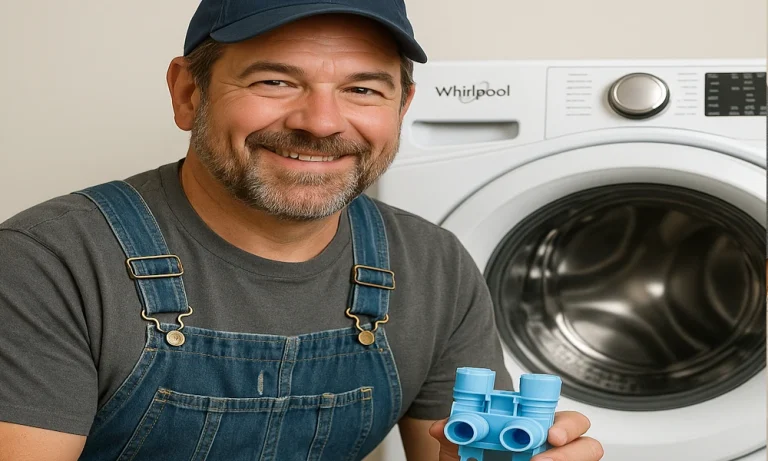
On a normal day, I visit about 3-4 homes in the metro Atlanta to fix someone’s appliance. Needless to say, I don’t have time to write about every repair I make. I just write about the ones that I think people can learn from it. So, for this week’s blog, I want to talk about Fixing a Stubborn Dishwasher in Johns Creek, GA.
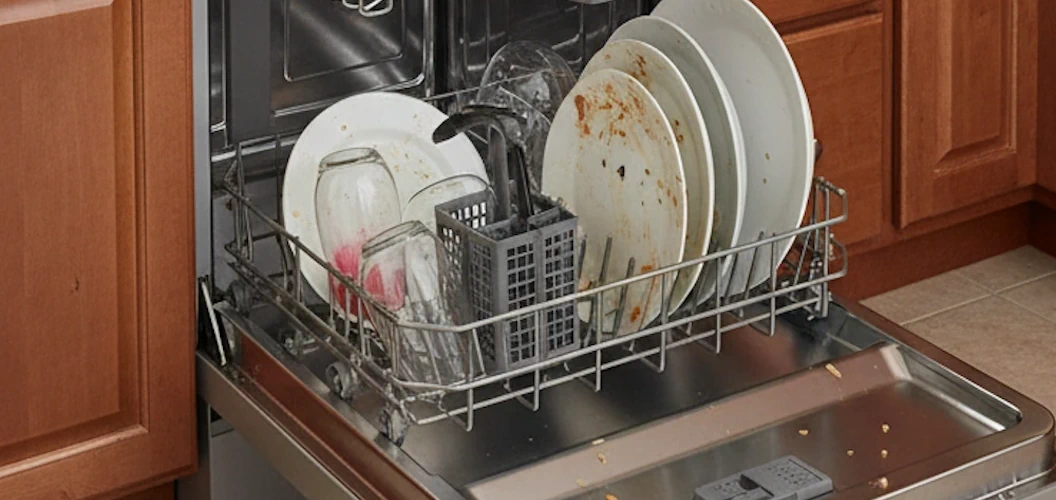
Last week I got a call from a family in Johns Creek who were dealing with a dishwasher that just wasn’t pulling its weight. The dishes were coming out with residue and cloudy film. Definitely not the kind of sparkle you want after running a full cycle.
Table of Contents
Key Takeaways
• If your dishwasher is not cleaning dishes well, low water flow, clogged spray arms, or a dirty filter may be to blame.
• A faulty water inlet valve can reduce water pressure and keep detergent from dissolving properly during the wash cycle.
• Regular dishwasher maintenance, like cleaning the filter and spray arms, can help prevent stubborn performance issues.
• New or unusual dishwasher sounds can be an early warning sign that a part needs attention before it fails completely.
• When basic troubleshooting does not solve the problem, a professional dishwasher repair can save time and restore proper cleaning performance.
The Call to Repair a Whirlpool Dishwasher
It started early Monday morning when Mrs. Jenkins in Johns Creek (not her real name) gave me a ring. She more or less said, “Bob, I don’t know what’s going on, my dishwasher runs, but it’s not cleaning anything. We’ve tried cleaning the filter and running vinegar through it, but the plates still come out dirty!”
When they called me, they mentioned they had already tried a few things like running a cleaning cycle, switching detergents but nothing seemed to work. She mentioned the dishwasher sounded normal but didn’t seem to be using much water. That right there gave me my first clue.
I told her I could swing by later that afternoon since I was already working nearby in Alpharetta. She was relieved as they had family visiting later in the week and needed it working ASAP.
The patient: Whirlpool Dishwasher Model WDF520PADM (2018)
The Issue: Not Cleaning the dishes properly
Diagnosing the Problem with the Dishwasher
When I arrived, I was greeted by the Jenkins family’s golden retriever (who clearly thought I was there just to play fetch). I rolled up my sleeves and got right to work.
First, I ran a quick test cycle. Right away, I noticed something, the dishwasher filled up very slowly. That’s never a good sign. I shut it off and removed the lower kick plate to check the water inlet valve.
Sure enough, the valve wasn’t opening fully, which meant the dishwasher wasn’t getting enough water pressure. Less water means poor spray arm action, and without proper water flow, the detergent doesn’t dissolve correctly leaving all that gunk behind.
This is actually a pretty common problems for older dishwashers that do not get regular maintenance and filter cleanups. Not a big deal from a handyman’s POV but can be frustrating for families:
Cause of the Dishwasher not Cleaning Dishes Well
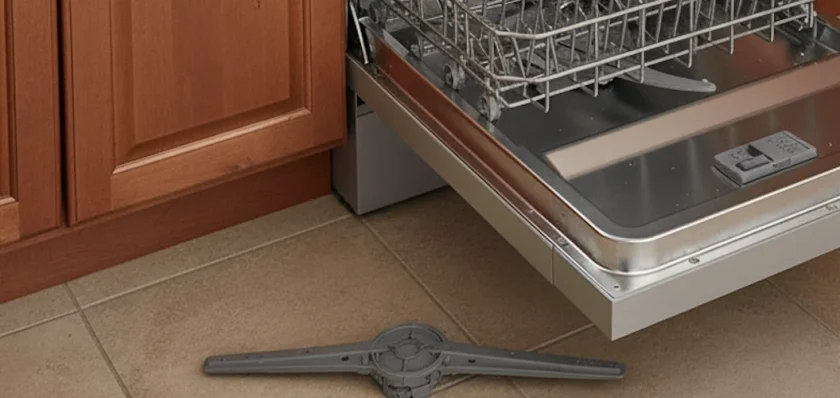
- The spray arms were partially clogged with mineral buildup.
- The filter was packed with food debris.
- And, the real culprit, a faulty water inlet valve that wasn’t letting enough water flow into the dishwasher.
That valve was causing poor wash performance because the dishwasher simply wasn’t getting enough water pressure to clean effectively.
The Dishwasher Repair Solution
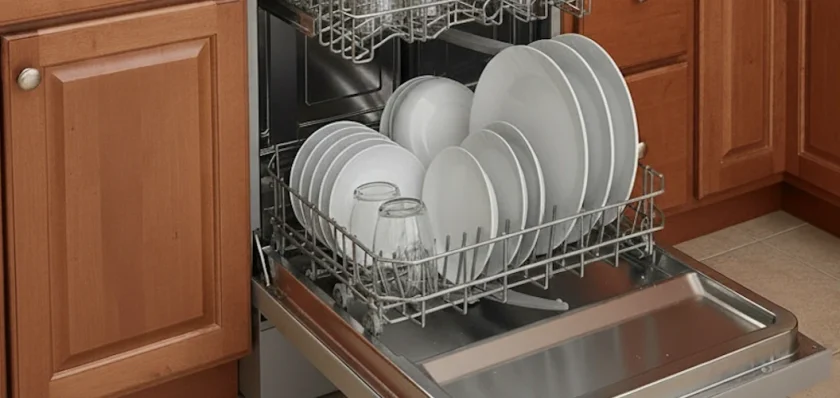
Luckily, I had the right part in my van and it was not a tough repair or replace an appliance situation. Within a couple of hours, I replaced the valve, cleaned out the filter and spray arms, ran a test cycle. The difference was immediate as the dishwasher filled fast, sprayed strong, and when the cycle finished, those dishes were spotless.
The client was thrilled, and I left knowing their dishwasher was ready for duty once more. All in a day’s work!
Handy Tips: What to Do when Your Dishwasher Is Not Working Properly
If your dishwasher isn’t cleaning well, there are a few simple things you can check before calling a pro like me:
- Clean the filter regularly – Food particles collect down there and block water flow. Remove it and rinse under warm water once a week if you use your dishwasher daily.
- Inspect the spray arms – Use a toothpick or needle to clear out clogged holes. Mineral buildup is a sneaky culprit.
- Run hot water before starting a cycle – Turn on your kitchen sink until the water is hot, so your dishwasher starts with hot water right away.
- Don’t overload it – Overcrowding blocks the spray pattern. Leave a bit of space between plates and bowls.
- Use rinse aid – It helps water sheet off dishes instead of drying in spots, especially if you have hard water.
- Check the detergent – Not all detergents work the same. If you’ve switched brands recently, try going back to your old one or using less powder.
Listen to the sounds your dishwasher makes.
That brings me to the next point…
Decoding Dishwasher Sounds
Dishwashers are chatty little machines. Learning what they’re saying can help you catch problems early:
- Humming: Usually normal as it’s the motor running or water being pumped.
- Grinding or rattling: Check for utensils or small items that might’ve fallen into the bottom of the tub.
- Squealing: Could indicate a worn-out pump or motor bearing.
- Knocking: Often caused by spray arms hitting something that’s loaded too high or sticking out.
If your dishwasher starts making new or unusual noises, it might be a sign that something’s wearing out or needs attention.
For those interested in Dishwasher sounds and how they can help you diagnose if there is a problem with your dishwasher, I recommend reading this article that explains different sounds when dishwasher is making noise.
Frequently Asked Questions about Dishwashers
Why is my dishwasher running but not cleaning the dishes?
A dishwasher may run without cleaning properly if the filter is clogged, the spray arms are blocked, the water inlet valve is failing, or the unit is not getting enough hot water during the cycle.
How do I know if my dishwasher water inlet valve is bad?
Common signs include slow filling, weak spray action, dishes coming out dirty, and detergent not dissolving fully. A technician can test the valve to confirm whether it needs to be replaced.
How often should I clean my dishwasher filter?
If you use your dishwasher every day, cleaning the filter about once a week is a good rule of thumb. Regular filter cleaning helps improve water flow and wash performance.
What causes dishwasher spray arms to clog?
Mineral buildup, food debris, and hard water deposits can block the small holes in the spray arms. When that happens, water cannot reach dishes evenly during the cycle.
Can strange dishwasher sounds mean something is wrong?
Yes. Grinding, squealing, knocking, or new rattling sounds can point to obstructions, worn parts, or spray arms hitting dishes. Catching these noises early can help prevent bigger repairs.
Should I repair my dishwasher or replace it?
That depends on the age of the dishwasher, the cost of the repair, and the condition of the rest of the machine. For many common issues, especially part failures like an inlet valve, repair is often the more affordable option.
Wrapping It Up
Every repair tells a story, and this Johns Creek dishwasher job reminded me how small parts can make a big difference. Whether it’s a simple cleaning or a full part replacement, keeping your dishwasher in shape saves water, energy, and time – and helps you avoid those frustrating “dirty clean dishes” moments.
If your dishwasher’s acting up or making strange sounds, don’t wait too long. Give me a call, and I’ll get it running like new again.
– Handy Man Bob, Your Local Appliance Fix-It Guy
About the Author