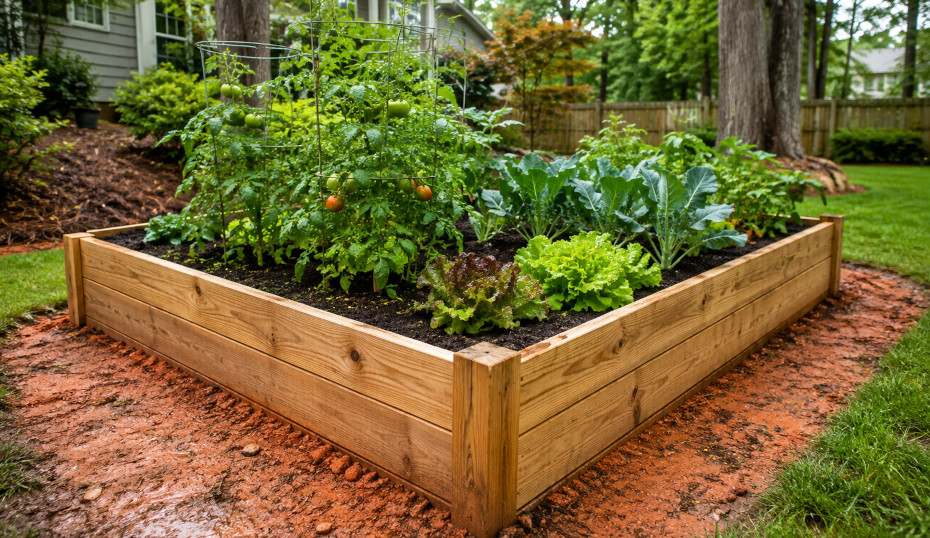
The first time I tried to dig a planting bed at our Georgia home, the shovel barely made a dent. The red clay was so hard that it felt like concrete.
After two failed tomato seasons, it became clear that trying to improve the ground underneath wasn’t working. Building above the clay turned out to be a much more practical approach.
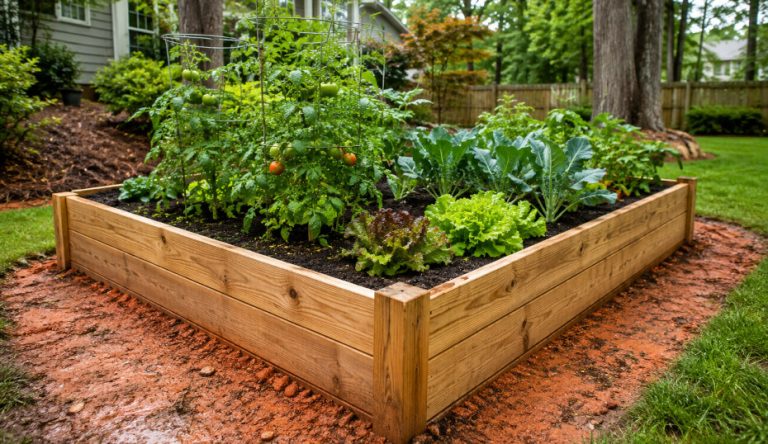
A raised garden bed creates a loose growing area where plants can develop roots without immediately dealing with compacted clay. A 4-by-8-foot bed that is 12 inches deep has worked well for this garden and has remained in use for three years.
If you’re dealing with heavy clay in Georgia, here’s what to consider when building your own raised garden bed.
Key Takeaways
- A raised bed can provide a more manageable growing environment over compacted Georgia clay.
- Aim for 10 to 12 inches of soil depth rather than making the bed too shallow to save money.
- Choose a level location with at least six hours of direct sunlight and good natural drainage.
- Leave the bottom open so excess water can move into the native soil below.
- A simple mix of topsoil, compost, and coarse sand or perlite has worked well for this garden.
- Check soil moisture and adjust watering based on heat and rainfall rather than following a fixed schedule.
Start With the Right Depth
The first bed was only 6 inches deep, mainly to save money on lumber. That decision backfired. Tomatoes and root vegetables struggled, and the bed had to be rebuilt the following spring.
A depth of 10 to 12 inches provides considerably more room for root development. The replacement bed is 12 inches deep, and it has worked much better.
Saving on lumber by making the frame too shallow may not be worth the cost and effort of rebuilding it later.
Choose the Location Carefully
Look for a level spot that receives at least six hours of direct sunlight. When preparing your yard for a new project, it’s also worth staying on top of routine home maintenance and knowing where to find a dependable appliance repair service if an issue arises.
Mature trees can make choosing a location more complicated. A spot that looks sunny in early spring may become considerably shadier once the trees fill out. Consider how much sunlight the bed will receive throughout the growing season rather than judging it from a single day.
Drainage is equally important. Georgia clay can become extremely hard when dry and remain wet after heavy rain. Avoid low areas where water naturally collects.
Build the Frame
A 4-by-8-foot frame with a 12-inch depth provides a practical amount of growing space.
The basic materials include:
- Untreated cedar or hemlock boards, either 2-by-10 or 2-by-12
- Exterior wood screws
- A drill
- A level
- A rubber mallet
- Quality topsoil
- Compost
- Coarse sand or perlite
- Hardware cloth if burrowing pests are a problem
Screws were used to secure the corners because they provide a strong connection through humid summers and occasional freezes.
Untreated wood was also chosen for the edible garden rather than pressure-treated lumber.
If you’re replacing an old appliance during a home project, consider whether any part can be repurposed before sending it to the scrap yard. For example, an old washing machine drum can be turned into a practical backyard fire pit.
Leave the Bottom Open
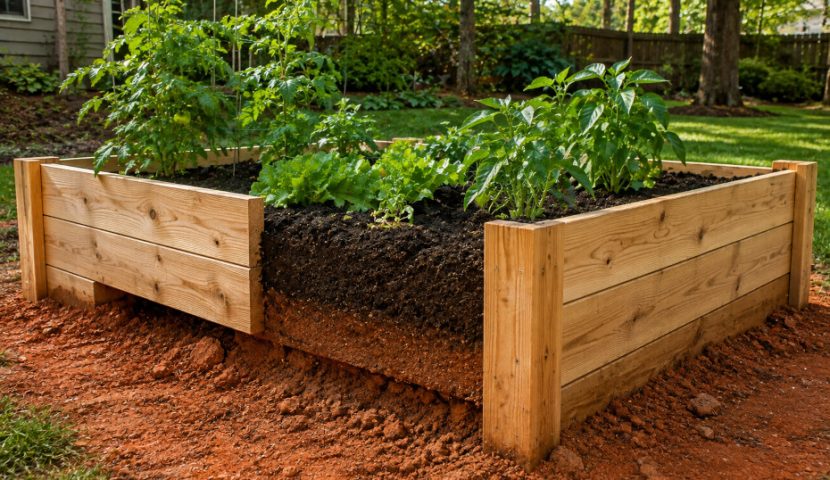
The bottom of the bed can remain open to the native soil.
Landscape fabric and cardboard weren’t used here. Leaving the bottom open allows excess water to move downward and keeps the raised-bed soil connected to the ground below.
There’s no need to completely transform the clay underneath. Most of the root development can happen in the loose soil added to the bed.
Use a Simple Soil Mix
The soil mix used for this garden is approximately:
- 60 percent quality topsoil
- 30 percent compost
- 10 percent coarse sand or perlite
This isn’t a universal formula. It’s simply the mix that has worked well here.
The goal is to provide enough moisture retention for plants while allowing excess water to drain after heavy summer storms. Mix the ingredients before filling the bed so they are distributed evenly.
After filling, give the soil a deep soak and let it settle for a day or two. Top it off before planting if the level drops.
Account for Georgia’s Climate
Heavy clay and Georgia’s humid summers and periods of heavy rain make drainage worth watching closely.
Check the yard after heavy rain to see where water collects, and avoid putting the bed in those areas.
During hot stretches, raised-bed soil can also dry out quickly. Check the soil and plants rather than relying on a fixed watering schedule. The bed may need checking daily and watering every one to two days during particularly hot weather.
After periods of rain, it may need considerably less water.
What Worked and What Didn’t
The biggest lesson I learned was that depth matters. The six-inch bed seemed like a reasonable way to save money, but I ended up spending more time and effort rebuilding it than I would have spent building a deeper bed from the start.
I also learned that location matters almost as much. Even with good soil, the plants can struggle if nearby trees eventually shade the bed or if rainwater collects underneath it.
For me, the combination that worked best was simple: a 12-inch-deep bed, a sunny location, a well-draining soil mix, and an open bottom over the native clay.
Frequently Asked Questions
How deep should a raised garden bed be for clay soil?
A depth of 10 to 12 inches is a good target. The original six-inch bed wasn’t deep enough for the tomatoes and root vegetables grown here.
Do you need to amend the clay underneath?
Not necessarily. The clay can remain as the native base while plants grow primarily in the soil added to the raised bed.
What’s the best wood for a raised garden bed in Georgia?
Untreated cedar or hemlock has worked well in the humid conditions here. Pressure-treated lumber was avoided around edible crops.
How often should you water a raised garden bed in Georgia?
It depends on the weather and how quickly the soil dries. During hot stretches, check the bed daily and water every one to two days as needed rather than following a fixed calendar.
Can you grow vegetables year-round in Georgia?
A raised bed can remain productive through much of the year by changing crops with the seasons. Tomatoes and peppers suit the warmer months, while greens, garlic, and root vegetables can be grown during cooler periods.
Build Above the Clay Instead of Fighting It
The biggest change came when I stopped trying to make heavy Georgia clay behave like loose garden soil. Building a raised bed gave me a growing environment I could control, and the 12-inch depth, sunny location, good drainage, and quality soil made a noticeable difference.
If you’re building a raised garden bed in Georgia, focus on those basics first. Give your plants enough room for their roots, pay attention to sunlight and drainage, and don’t make the bed too shallow just to save money.
The same approach applies to maintaining the rest of the home. From the garden to everyday household systems and appliances, taking care of small issues before they become bigger problems can save time and frustration. When an appliance needs professional attention, Appliance EMT is another resource Georgia homeowners can turn to.
For me, building above the clay instead of fighting it was the change that finally made raised-bed gardening work.
About the Author