A running toilet is one of those problems homeowners tend to ignore longer than they should.
The toilet still flushes. Nothing leaks onto the bathroom floor. After a while, the faint trickling sound almost fades into the background.
Then the water bill arrives.
Over the years, I’ve seen homeowners put off to fix a running toilet for weeks because the problem didn’t seem urgent. In one older Atlanta home, the owner thought the toilet had a “small noise issue.” The flapper had deteriorated so badly that the toilet was silently cycling every few minutes, wasting hundreds of gallons of water daily.
A constantly running toilet can waste anywhere from 200 to more than 6,000 gallons of water per day, depending on the severity of the leak.
The good news is that most running toilet repairs are simple and inexpensive.
In most cases, the issue comes down to one of three things:
- A worn-out flapper
- A faulty fill valve
- A float adjusted too high
Most repairs take less than an hour and cost under $20 in parts.
This guide walks you through diagnosing the problem, repairing it yourself, and avoiding common mistakes I see homeowners make.
Key Takeaways
- Most running toilets are caused by a bad flapper, faulty fill valve, or improperly adjusted float
- The food coloring test is the quickest way to confirm a leaking flapper
- Most replacement parts cost between $5 and $15
- Basic repairs usually take 30 to 60 minutes
- A constantly running toilet can waste thousands of gallons of water every month
- You should always shut off the water supply before opening the tank
Quick Running Toilet Checklist
Before removing the tank lid, check for these common warning signs:
- Constant hissing or trickling sounds
- Water flowing into the overflow tube
- Random refill cycles when nobody has flushed
- Mineral buildup around the flapper seat
- A float sitting above the overflow tube water line
You can also perform a quick food coloring test to confirm whether water is leaking from the tank into the bowl.
Difficulty and Estimated Repair Time
Difficulty: Easy
Estimated Repair Time: 30–60 minutes
Estimated Cost: $5–$20
This is one of the best beginner plumbing repairs to learn because the risk is low, the tools are simple, and the savings are immediate.
Why Toilets Keep Running
A toilet works through a pretty simple sequence.
When you press the handle, the flapper lifts, releasing water from the tank into the bowl. As the tank empties, the fill valve opens to refill it. Once the water reaches the correct level, the float rises and shuts off the valve.
When one of those parts fails, the cycle never fully stops.
Sometimes water slowly leaks past the flapper. Other times, the fill valve sticks partially open and keeps feeding water into the tank. In some toilets, the water level rises too high and spills into the overflow tube nonstop.
The result is the same: wasted water and an annoying refill cycle that never quite goes quiet.
The 3 Most Common Reasons a Toilet Keeps Running
1. Worn or Warped Flapper
The flapper is the rubber seal at the bottom of the tank.
Over time, rubber hardens, cracks, or becomes coated with mineral deposits. I’ve opened toilet tanks where the flapper felt almost like stiff plastic instead of soft rubber.
When the seal weakens, water slowly leaks into the bowl, forcing the tank to refill repeatedly.
Signs Your Toilet Flapper Is Bad
- Toilet refills randomly every few minutes
- Water trickles into the bowl continuously
- Food coloring appears in the bowl during testing
- The flapper looks warped, cracked, or brittle
One of the easiest clues is hearing a brief ruffling sound in the middle of the night when the house is quiet.
2. Faulty Fill Valve
The fill valve controls water entering the tank after each flush.
When debris builds up inside the valve or internal seals wear out, the valve may not shut off completely.
Common symptoms include:
- Continuous hissing
- Slow nonstop refilling
- Water level fluctuations
- Weak shutoff after flushing
In older homes around Atlanta, sediment buildup inside the valve is especially common.
3. Float Set Too High
The float controls the water level inside the tank.
If the float is adjusted too high, water continuously spills into the overflow tube. The toilet keeps trying to refill because it never reaches a true stopping point.
This is often the simplest repair because it usually requires no replacement parts.
Tools and Parts You May Need
- Adjustable wrench
- Needle-nose pliers
- Old towels or a small bucket
- Replacement flapper
- Universal fill valve
- White vinegar for mineral deposits
- Old toothbrush or scrub pad
You do not necessarily need every item before starting. I usually recommend diagnosing the problem first, then buying only the parts you actually need.
Step 1: Shut Off the Water Supply
Locate the shutoff valve behind the toilet near the floor.
Turn the valve clockwise until it stops.
Flush the toilet once to drain most of the water in the tank, then carefully remove the tank lid.
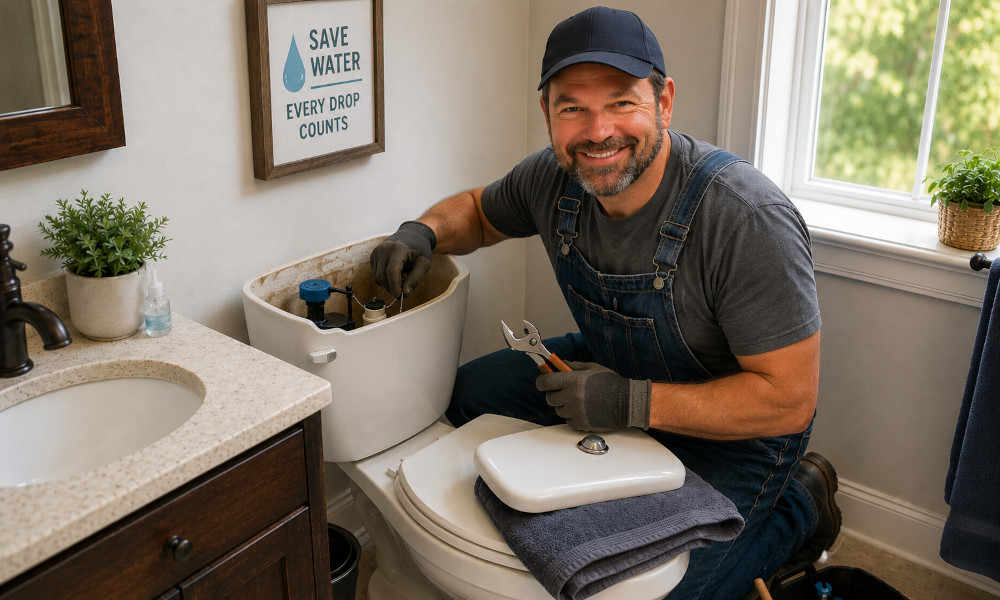
A surprising number of homeowners crack the lid by setting it on tile or bumping it against the sink. I usually place it on a folded towel somewhere out of the way.
Step 2: Perform the Food Coloring Test
This is the fastest way to confirm whether the flapper is leaking.
How to Perform the Test
- Add 5–10 drops of food coloring into the tank
- Do not flush the toilet
- Wait about 10 minutes
- Check the bowl for colored water
If color appears in the bowl, water is leaking past the flapper.
If the bowl remains clear and the toilet still runs, move on to inspecting the fill valve and float assembly.
Step 3: Replace the Flapper
Replacing a toilet flapper is one of the easiest plumbing repairs you can do yourself.
In most homes, this repair takes about 10 minutes.
How to Replace a Toilet Flapper
- Shut off the water supply
- Flush the toilet to drain the tank
- Disconnect the chain from the flush arm
- Unhook the old flapper from the overflow tube pegs
- Match the replacement flapper to your toilet model
- Install the new flapper
- Reattach the chain with slight slack
- Turn the water back on and test flushes
The chain adjustment matters more than many homeowners realize.
If the chain is too tight, the flapper may never seal completely. If the chain is too loose, it can slide under the flapper and slightly hold it open.
I’ve seen toilets continue running simply because the chain got tangled after installation.
A small amount of slack usually works best.
Clean the Flush Valve Seat First
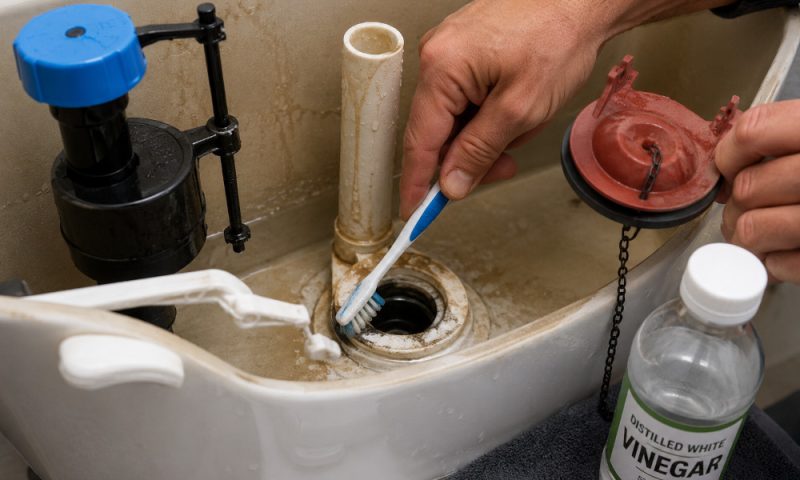
One of the most common mistakes I see is replacing the flapper without cleaning the surface underneath it.
In older homes, especially in areas with hard water, mineral buildup often forms a chalky ring around the flush valve seat. Even a brand-new flapper may leak if it sits atop calcium deposits.
Before installing the replacement part, scrub the area gently with white vinegar and an old toothbrush.
That extra two minutes can save you from tearing the tank apart again later.
Step 4: Adjust or Replace the Fill Valve
If the food coloring test does not reveal a leak, inspect the fill valve and float assembly next.
Watch the tank closely as it refills after flushing.
- If water spills into the overflow tube, the float is probably set too high
- If the valve continues hissing even below the overflow line, the fill valve itself is likely failing
Adjusting the Float
Older toilets often use a ball float attached to a metal arm.
You can lower the water level by gently bending the arm downward.
Newer toilets usually have:
- An adjustment screw
- A sliding clip
- A dial adjustment mechanism
Lower the float until the water line sits roughly one inch below the top of the overflow tube.
Sometimes a tiny adjustment is all it takes.
Replacing the Fill Valve
If adjusting the float does not solve the problem, replacing the fill valve is usually the best option.
How to Replace a Fill Valve
- Shut off the water supply
- Flush the toilet to empty the tank
- Disconnect the supply line
- Remove the old fill valve locknut
- Lift out the old valve
- Adjust the height of the new valve
- Install and tighten the new valve
- Reconnect the supply line
- Attach the refill tube correctly
- Turn the water back on slowly and test the toilet
Most fill valve replacements take around 20 to 30 minutes.
One mistake to avoid is overtightening the plastic locknut underneath the tank. Hand-tight plus a slight wrench adjustment is usually enough.
Step 5: Test Everything Carefully
Once repairs are complete, turn the water back on slowly and allow the tank to refill fully.
Flush the toilet several times while checking:
- Flapper seal
- Water level
- Fill valve shutoff
- Overflow tube
- Supply line connections
Then leave the toilet alone for 10 to 15 minutes and listen carefully.
Silence is what you want.
If you still hear running water after replacing both the flapper and fill valve, inspect the supply line underneath the tank. A slow drip there can sometimes sound surprisingly similar to an internal leak.
What Homeowners Often Miss
In older Atlanta homes, mineral deposits are one of the most overlooked causes of toilet leaks.
I’ve opened tanks that looked perfectly normal at first glance, only to find thick calcium buildup preventing the flapper from sealing completely.
I’ve also learned that homeowners often replace parts too quickly without testing first.
Spending five minutes on the food coloring test can save unnecessary trips to the hardware store.
Another issue I run into frequently is people forcing old shutoff valves closed too aggressively. On older plumbing systems, that can create a second repair problem if the valve starts leaking afterward.
Sometimes the smartest repair is the simplest one.
When to Call a Professional
Most running toilet problems are DIY-friendly, but some situations require a plumber.
Call a Professional If:
- The toilet tank is cracked
- The shutoff valve will not close completely
- Water leaks from the toilet base
- Multiple replacement parts fail to stop the leak
- The flush valve seat is cracked or badly corroded
- The toilet rocks or shifts when you sit on it
At that point, replacing the toilet may make more financial sense than continuing repairs.
Cost Breakdown: DIY vs. Professional Repair
| Repair | Typical Cost |
| DIY flapper replacement | $5–$10 |
| DIY fill valve replacement | $10–$15 |
| Professional repair | $100–$250+ |
For most homeowners, learning this repair once can save money for years.
Frequently Asked Questions
How much water does a running toilet waste?
A slow leak may waste about 200 gallons per day. Severe leaks can waste thousands of gallons per day and noticeably increase monthly water bills.
Can I use any toilet flapper?
No. Toilet flappers come in different sizes and styles.
I recommend bringing the old flapper to the hardware store or checking your toilet model number before buying a replacement.
Why does my toilet only run at night?
This usually points to a slow flapper leak.
During quiet nighttime hours, the refill cycle becomes easier to hear.
Is a running toilet an emergency?
Usually not.
Most running toilets will not flood the bathroom, but ongoing water waste makes the repair worth addressing as soon as possible.
Final Thoughts
A running toilet is one of the most common plumbing problems homeowners deal with, and it is also one of the easiest DIY plumbing repairs to learn.
In most cases, the fix comes down to:
- Replacing the flapper
- Adjusting the float
- Installing a new fill valve
The repair is inexpensive, beginner-friendly, and often takes less than an hour.
More importantly, fixing the issue early can prevent months of wasted water and higher utility bills.
Many homeowners overlook how small maintenance problems quietly contribute to the hidden cost of beautiful homes, especially when leaks and inefficient fixtures go unnoticed for months.
Once you repair your first constantly running toilet, other basic household plumbing problems become far less intimidating.
The same step-by-step troubleshooting approach also helps with appliance issues like clogged drains and standing water. If you’ve been dealing with kitchen appliance problems too, this guide on how to fix a dishwasher that won’t drain walks through another beginner-friendly DIY repair homeowners can often handle themselves.
About the Author