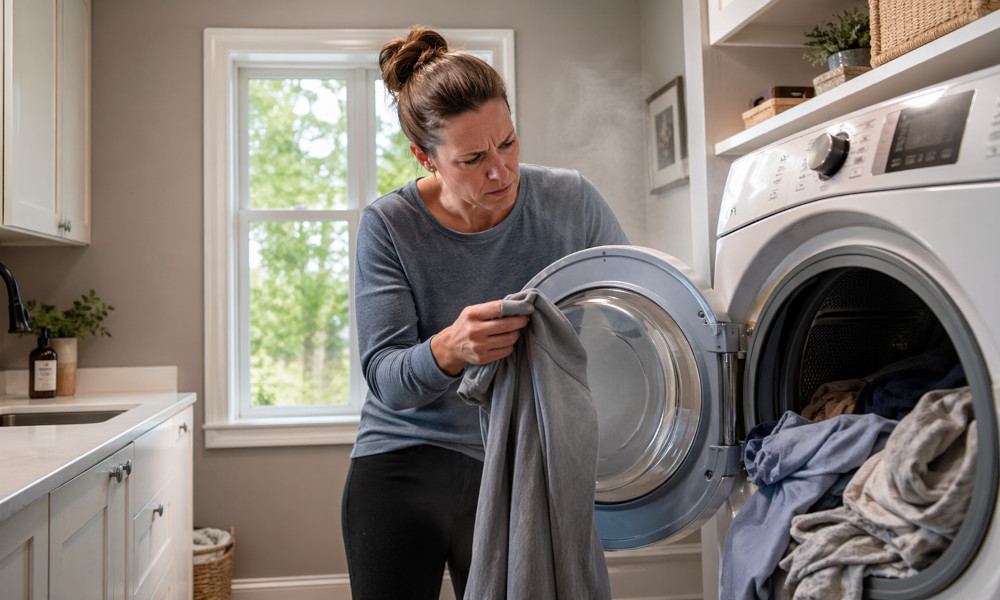
If your dryer suddenly needs two cycles to get clothes dry, something’s off. Slow dryer in Alpharetta is one of the most common issues I see. Also, it is a frequent reason homeowners end up needing appliance repair in Alpharetta.
Most people don’t worry about it at first. They just hit “start” again and move on. But after a few weeks, it becomes routine. That’s when it starts costing you more than you think—higher energy bills, longer laundry days, and extra wear on the machine.
The good news is that this usually isn’t a major failure. In fact, a lot of the time, the fix is simple once you know where to look.
Key Takeaways
- A dryer that needs two cycles always has a root cause
- Restricted airflow is the most common issue in Alpharetta homes
- Humidity in North Fulton makes drying problems worse
- Many fixes can be done at home in under an hour
- Heating and electrical issues usually require a technician
- Ignoring the problem can increase fire risk and energy costs
Why Your Dryer Is Taking Longer to Dry Clothes
For a dryer to work properly, three things have to happen at the same time:
- Heat needs to be consistent
- Air has to move freely
- Moisture needs a way to escape
When one of those breaks down, drying time goes up. Most homeowners assume the appliance is failing, but more often than not, it comes down to airflow.
Common Causes of a Slow Dryer in Alpharetta Homes
1. Clogged Dryer Vent
This is the first thing I check, and honestly, it’s the problem more often than anything else.
Lint builds up slowly inside the vent line. You don’t notice it until airflow gets choked off. When that happens, hot air stays trapped, and moisture has nowhere to go.
I’ve opened vent lines in older Alpharetta homes that were almost completely blocked, especially in neighborhoods with longer duct runs.
Quick check:
- Disconnect the vent hose
- Run the dryer briefly
- If drying improves, airflow is restricted
What to do:
- Use a vent cleaning brush or kit
- Clean the hose and wall duct
- Check the outside vent cap for lint, debris, or even bird nests
Homes near Wills Road and Windward tend to have longer vents, which makes buildup happen faster.
2. Dirty or Blocked Lint Trap
This sounds obvious, but it gets overlooked more than you’d expect.
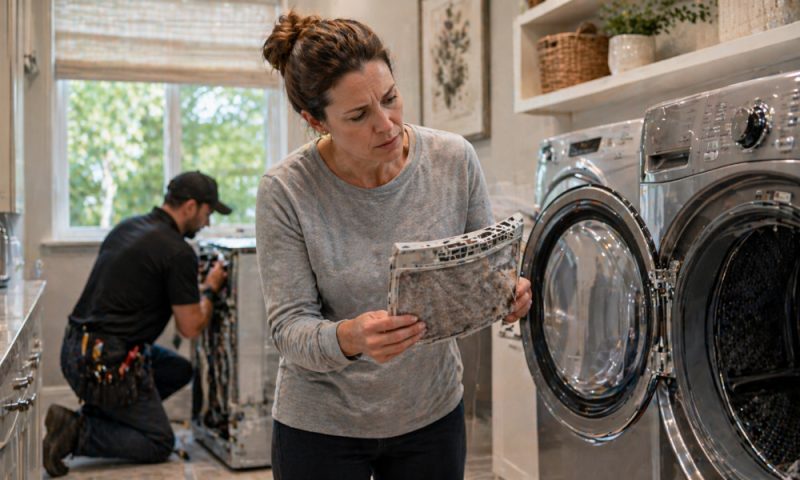
A lint screen doesn’t have to look clogged to cause problems. Dryer sheet residue can leave a thin film that blocks airflow.
Simple fix:
- Clean the lint trap after every load
- Wash it with soap and water every few weeks
If water doesn’t pass through the screen easily, it needs cleaning.
3. Overloading the Dryer
I get why people do it. Fewer loads feels more efficient. But this one backfires.
When the drum is packed:
- Air can’t circulate properly
- Clothes in the middle stay damp
Breaking one large load into two smaller ones often finishes faster overall. It’s one of the easiest fixes, but also one of the most ignored.
4. Weak or Failing Heating Element
If airflow checks out, the next thing to look at is heat.
A failing heating element doesn’t always stop working completely. Sometimes it just doesn’t get hot enough.
Signs:
- Clothes feel warm but not dry
- Cycles take much longer than usual
Testing requires a multimeter, so I usually tell people it’s worth calling a technician.
5. Dirty Moisture Sensors
Modern dryers rely on sensors to decide when clothes are dry. When those sensors get coated with residue, they stop reading correctly.
I’ve seen dryers shut off early even when clothes were still damp, all because of sensor buildup.
Quick fix:
- Wipe sensors with rubbing alcohol
- Takes a few minutes and can make a noticeable difference
6. Faulty Thermostat or Thermal Fuse
These parts control temperature and safety. When they fail, the dryer may not heat properly or may stop heating altogether.
This isn’t something most homeowners can diagnose without tools, so if you’ve ruled out airflow issues and basic maintenance, it’s time to bring in someone.
How Alpharetta’s Climate Affects Dryer Performance
Even when everything is working correctly, the local climate can slow things down.
Alpharetta summers get humid, and that moisture affects how quickly clothes dry.
Here’s what I see in North Fulton homes:
- High humidity slows evaporation inside the drum
- Vent lines in garages or crawl spaces collect condensation
- Longer duct systems lose efficiency with each bend
In newer developments or homes near Milton, longer vent runs are common. Every turn in the duct reduces airflow slightly, and it adds up.
If your vent run is long, you may need:
- More frequent cleanings
- A vent booster fan in some setups
When to Fix It Yourself and When to Call a Pro
Some issues are easy to handle. Others are better left alone.
DIY fixes:
- Cleaning the lint trap
- Clearing the vent hose
- Wiping moisture sensors
- Checking the outside vent
Call a technician if you notice:
- No heat at all
- Burning smells
- Repeated breaker trips
- Gas ignition problems
I worked with a homeowner near Windward Parkway who had already cleaned everything but still had no heat. The issue turned out to be a faulty thermostat. It was a quick fix, but not something you’d spot without testing tools.
Some appliance issues are simple enough to handle on your own. For example, if you’re dealing with washer-related problems, this step-by-step guide on replacing a water inlet valve can walk you through the process safely.
Dryer Problems in North Fulton Homes
Across Alpharetta, Johns Creek, and Milton, a few patterns come up again and again:
- Longer-than-average vent systems
- Higher humidity compared to other regions
- Faster lint buildup due to climate conditions
Homes built in the early 2000s, especially, tend to have vent layouts that aren’t ideal. That makes regular maintenance more important than most people expect.
What Happens When You Keep Running That Second Cycle
The biggest issue isn’t the dryer. It’s a delay.
People get used to running a second cycle and stop thinking about it. Meanwhile:
- Energy bills creep up
- The dryer works harder than it should
- Lint buildup increases fire risk
I’ve also seen plenty of dryers replaced when they didn’t need to be. In many cases, the fix costs less than $50 and takes under an hour. That’s why I always start with airflow before anything else.
Frequently Asked Questions
How often should I clean my dryer vent?
At least once a year. If you run frequent loads or have a long vent system, it’s safer to run every 6 months.
Can a slow dryer cause a fire?
Yes. Lint buildup is a leading cause of dryer fires.
Why does drying take longer in humid weather?
Moist air slows evaporation, so clothes take longer to dry.
My dryer runs but doesn’t heat. What does that mean?
It’s usually an issue with the thermal fuse or heating element.
Should I repair or replace my dryer?
If it’s under 10 years old and the repair costs less than half the price of a new unit, repair is usually the better choice.
Final Thoughts
A dryer that needs two cycles is a signal, not a coincidence.
Start with the basics. Clean the lint trap, check the vent, and make sure air can move freely. Those steps fix most of the problems I see in Alpharetta homes.
If that doesn’t solve it, the issue is likely internal. At that point, getting a technician involved will save you time and guesswork.
Either way, it’s fixable. You just need to track down what’s slowing things down.
About the Author