A low hum from under the kitchen sink usually gets your attention pretty quickly. When a garbage disposal hums but does not spin, the motor is often trying to turn a jammed plate rather than failing completely.
I work on home maintenance problems around metro Atlanta, and disposal jams are usually straightforward to troubleshoot when you approach them carefully. The bigger mistake is forcing something when the problem actually calls for a repair.
If your disposal is jammed, smells unpleasant, or has stopped working, here is how to unjam and deodorize a garbage disposal.
Key Takeaways
- Disconnect the power before working on the disposal.
- Never reach into the chamber with your hand. Use tongs or pliers for visible objects.
- A humming disposal that will not spin is often jammed.
- Food residue under the rubber splash guard can cause unpleasant odors.
- Grease, hard objects, fibrous foods, and large amounts of starchy foods can cause problems.
- A bottom leak, burning smell, or repeated reset or breaker trips is a reason to stop and call a professional.
Why Does a Garbage Disposal Jam?
A garbage disposal doesn’t work like the spinning blades many people picture. Inside, a rotating plate and metal impellers push food against a stationary grind ring.
Hard or stringy material can get caught between those parts and stop the plate from moving. That is often what produces the familiar humming sound.
Common troublemakers include fruit pits, small bones, nut shells, bottle caps, utensils, celery, corn husks, onion skins, and eggshell membranes.
Rice, pasta, and potato peels can cause a different type of problem. They can swell and turn into a paste, which may contribute to a clogged drain even if the disposal itself is still running.
Before You Unjam the Disposal
Start with the most important safety step: disconnect the power.
Turn off the wall switch, then unplug the disposal under the sink. If the unit is hardwired, switch off the appropriate breaker.
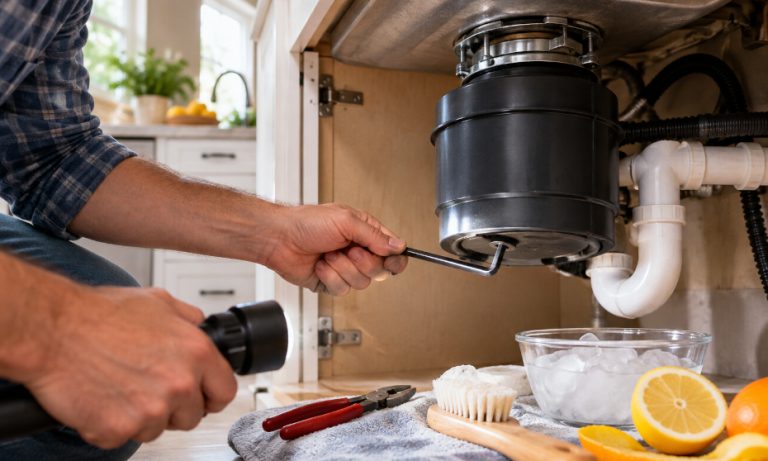
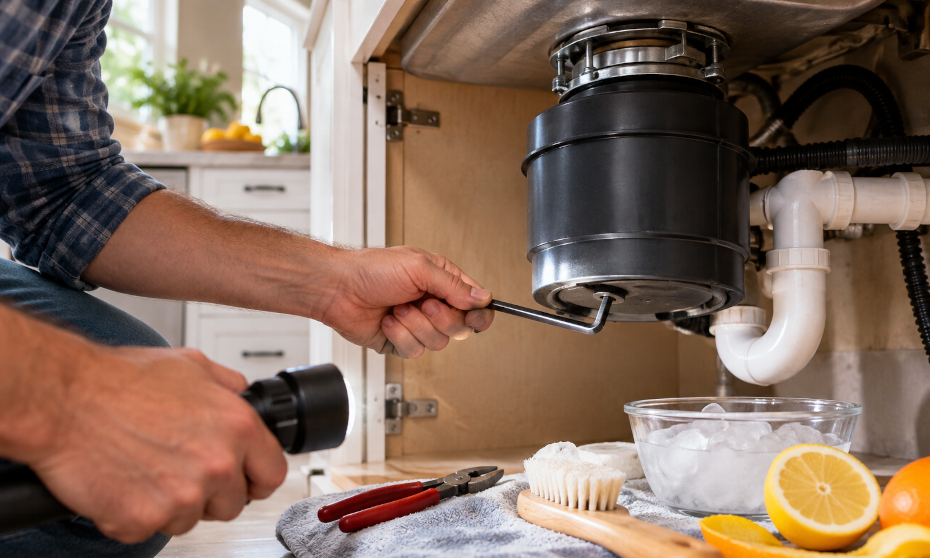
I also recommend having a flashlight and a pair of long-nosed pliers or tongs nearby. You may need them to see and remove whatever caused the jam.
Do not put your hand inside the disposal, even if you believe the power is off.
How to Unjam a Garbage Disposal
Once you disconnect the power, work through the problem slowly.
First, shine a flashlight down the drain. If you can see an object, use tongs or pliers to remove it.
Next, look underneath the disposal for a hex-shaped socket. Many models have one in the center of the bottom housing. Insert the appropriate hex key and work it back and forth. It may be stiff at first, but the goal is to get the plate moving freely again.
Some older models do not have a bottom hex socket. With power completely disconnected, you can sometimes use a wooden spoon handle from above to work against an impeller. Do not force it if the plate will not move.
Once you clear the obstruction, press the reset button on the bottom of the unit. Restore power, run cold water, and briefly test the disposal.
If it immediately hums again or the reset trips, stop there. Repeatedly resetting a disposal will not solve an unresolved mechanical or electrical problem.
What Different Garbage Disposal Problems Can Mean
Not every disposal problem is a jam.
| Symptom | Possible cause |
| Hums but will not spin | Jammed plate or impeller |
| Completely silent | Reset, breaker, switch, or power problem |
| Leaks from the top | Sink flange or mounting problem |
| Leaks from the side | Dishwasher hose or drain connection |
| Leaks from the bottom | Failed internal seal |
A bottom leak deserves particular attention. If water comes through the bottom of the disposal housing, tightening an outside connection generally will not fix a failed internal seal. If the problem goes beyond a simple jam, appliance repair in Atlanta can help determine whether the disposal needs a repair or replacement.
If water is standing in the sink after the disposal problem, the drain may also be clogged. The dishwasher uses the same general drainage path, so a disposal or drain problem can affect how the dishwasher empties.
How to Get Rid of Garbage Disposal Odors
A smelly disposal does not automatically mean the motor has a problem. Food residue can collect beneath the rubber splash guard and along accessible surfaces inside the unit.
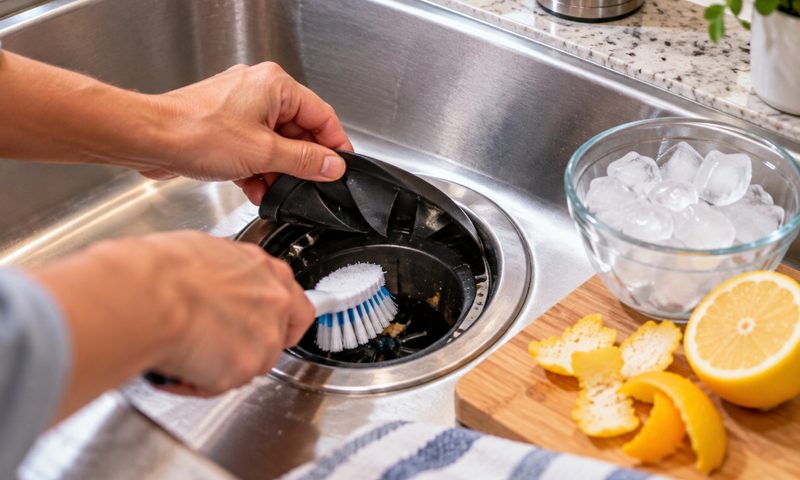
With the power off, pull the splash guard back and scrub underneath it with dish soap and a brush.
After cleaning, you can run a cup of ice cubes through the disposal with cold water. A few small lemon or orange peels can help freshen the smell afterward. Finish by running cold water for about 30 seconds.
I would skip bleach and harsh drain cleaners. They can damage components and create an additional safety concern.
What Should You Keep Out of the Disposal?
Garbage disposals are useful for food scraps, but they are not designed to handle everything that gets near the sink.
Keep grease, cooking oil, and fat out because they can build up in the plumbing. Large amounts of coffee grounds, rice, pasta, and oats can also contribute to clogs.
Fibrous foods such as celery and corn husks can wrap around moving parts, while bones, fruit pits, and nut shells can cause jams. Never put non-food objects down the disposal.
When in doubt, putting the item in the trash or compost is usually safer than testing what the disposal can handle.
Garbage Disposal Problems I See in Atlanta
Atlanta’s seasonal cooking habits can create a few disposal headaches. Peach pits and pecan shells, for example, are hard enough to cause trouble and should stay out of the disposal.
Holiday meals can be another stress point because more food scraps and grease tend to make their way toward the kitchen sink.
Older Atlanta homes can present a different issue. A remodeled kitchen may have newer fixtures connected to older drain lines, so slow drainage can show up even when the disposal is working. If you own an older Georgia home, you can also improve its energy efficiency in practical ways without a full renovation.
Grease is worth paying particular attention to. Atlanta’s Department of Watershed Management advises residents to keep fats, oils, and grease out of household drains.
The summer heat and humidity can also make an existing food odor more noticeable. If your disposal starts smelling sooner than usual, check the splash guard rather than assuming the motor is going bad.
When Is It Time to Call a Professional?
A simple jam or odor is usually something you can investigate yourself. There are a few situations where I would stop, though.
Call for professional help if the disposal:
- Leaks from the bottom
- Keeps tripping the reset button or circuit breaker
- Produces a burning smell
- Remains completely dead after basic checks
- Makes unusual noises even after the jam has been cleared
Last fall, a neighbor had a disposal that both hummed and leaked. The hex key freed the jam, but the leak remained. It was coming from the bottom of the unit, which pointed to an internal seal problem rather than a loose connection.
At that point, continuing to troubleshoot it herself did not make much sense, so I recommended having Appliance EMT handle the repair. If you need appliance repair in Atlanta, professional help is the better option when the problem goes beyond a straightforward jam or cleaning.
Frequently Asked Questions
Why is my garbage disposal humming but not spinning?
A jammed plate or impeller is a common cause. Disconnect the power, remove any visible object with tongs or pliers, and work the bottom hex socket until the plate moves freely.
Why does my garbage disposal smell?
Food residue often collects beneath the rubber splash guard. Clean that area with dish soap and a brush, then flush the disposal with cold water.
Can I use chemical drain cleaner in a garbage disposal?
I would avoid harsh chemical drain cleaners. They can damage components and create a safety problem if the disposal needs service later.
How often should I clean my garbage disposal?
Once a month is a reasonable routine for many households. If you cook frequently or notice odors during Atlanta’s warmer months, cleaning it more often can help.
When should I call a professional?
If the disposal leaks from the bottom, repeatedly trips, produces a burning smell, stays dead after basic troubleshooting, or develops a problem you cannot safely identify, stop and have it inspected.
Know When to Stop
Most garbage disposal problems do not require a major repair. A humming unit may simply be jammed, while a bad smell often traces to food residue under the splash guard.
Start by disconnecting the power, keep your hands out of the chamber, and avoid sending grease, hard objects, and fibrous foods down the drain.
If the disposal leaks from the bottom, keeps tripping, smells like it is burning, or still will not work after basic troubleshooting, do not keep forcing it. That is where DIY ends and a proper repair begins.
About the Author