Buying a home usually comes with a long DIY home safety checks list. Change the address, set up utilities, find a place for the coffee maker, and somehow get through all those boxes.
Before you get too far into unpacking, though, take a few minutes to walk through the house with a flashlight. If you’re still working through your overall move-in checklist, our guide to how to set up your new home in Atlanta can help you organize the other essentials you need to handle during those first days.
One of the first things I look for in a newly purchased home is whether the easy-to-overlook systems are actually ready for everyday use. I’ve seen homes where the breaker panel labels no longer matched the circuits, appliances had questionable connections, or homeowners didn’t know where the main water shutoff was until they needed it.
You don’t need to spend the entire day inspecting the house. A quick walkthrough before furniture and boxes fill the rooms can help you understand how the important systems work and spot obvious problems early.
Here are the home safety checks I recommend making before you settle in.
Key Takeaways
- Check the electrical panel and make sure the circuit labels match what they control.
- Locate the main water and gas shutoffs before you have an emergency.
- Test every smoke and carbon monoxide detector.
- Check exterior door and window locks, and consider rekeying the locks.
- Look over the water heater for its age, leaks, corrosion, and other visible problems.
- Inspect the visible connections on appliances that came with the home.
- Give older Atlanta homes extra attention because renovations may have updated some systems while leaving others older.
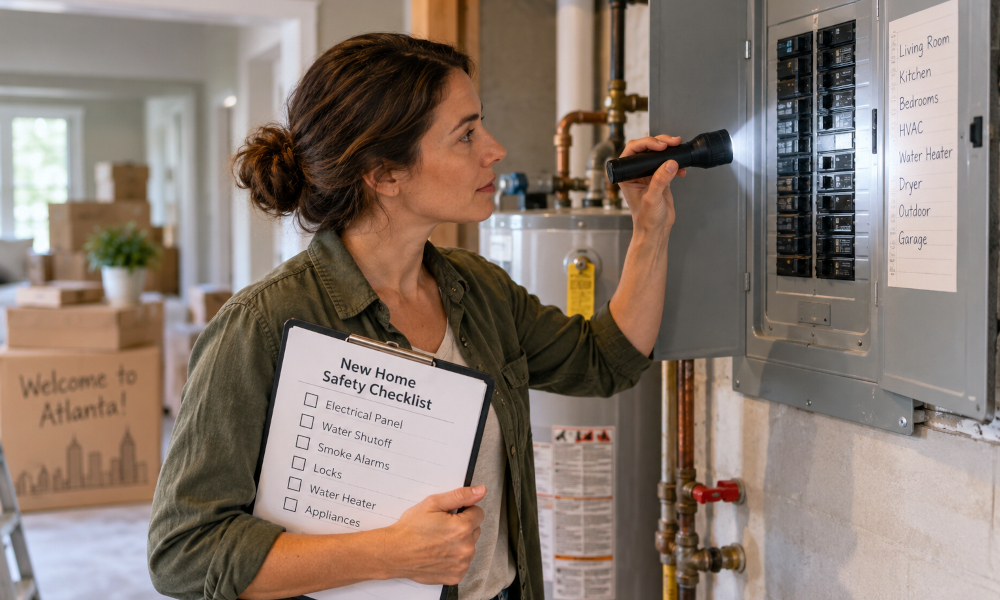
1. Check the Electrical Panel Before Plugging Everything In
The electrical panel probably isn’t the first thing on your mind when you get the keys. It should be near the top of your move-in checklist.
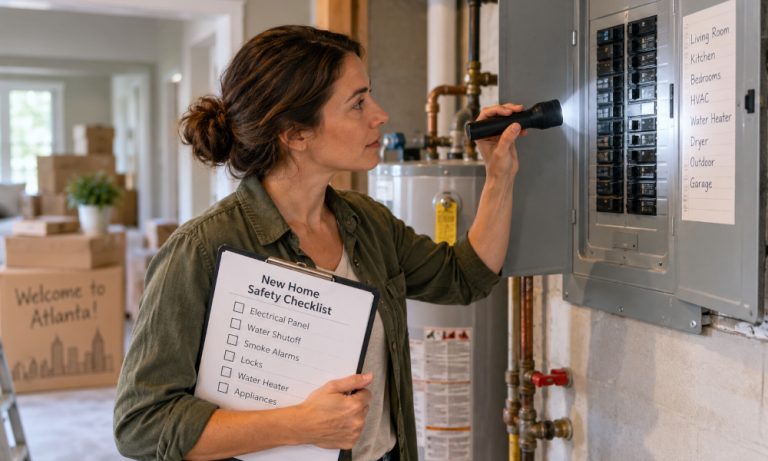
Start by looking at the panel itself. You’re looking for obvious signs of trouble, including rust or significant corrosion, scorch marks, overheating, damaged components, or other conditions that don’t look right.
Don’t try to repair those problems yourself. If something looks unsafe or unfamiliar, have a qualified electrician take a look.
If the panel appears to be in good condition, check whether the labels are accurate.
This is one of those small jobs that becomes much harder after you’ve unpacked everything. Have someone walk through the house while you switch off one breaker at a time. Note which outlets, lights, and appliances lose power, then update the labels if necessary.
I’ve found that panel labels can become inaccurate after years of renovations. A homeowner may have remodeled a kitchen, added an outlet, or changed a circuit without updating the panel directory.
Knowing exactly what each breaker controls can save you time later, especially if you ever need to shut off power quickly.
Pay Extra Attention in Older Atlanta Homes
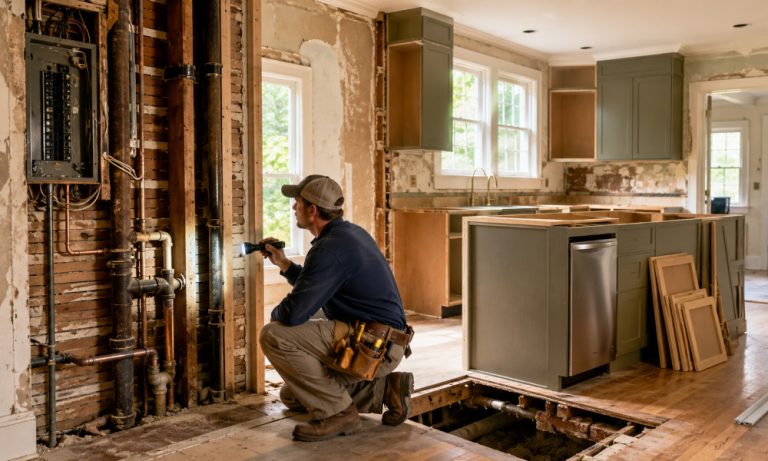
Older homes around Atlanta may have electrical systems modified through several renovations. You may find newer work in one part of the house and older components somewhere else.
If you encounter a Federal Pacific or Zinsco panel, don’t treat it as a weekend DIY project. Have a qualified electrician evaluate it.
The goal of this check isn’t to become an electrician. It’s to understand what you have and recognize when something needs professional attention.
2. Find the Main Water and Gas Shutoffs
A leaking pipe is a terrible time to start searching for the water shutoff.
Before you unpack, find the main water shutoff and make sure everyone in the household knows where it is.
Depending on the home, you may find the valve in a basement, crawlspace, utility area, or near the point where the water line enters the house. In some newer communities, the shutoff may be located at the street.
Take a moment to understand how the valve operates. If it hasn’t been used in years and won’t move easily, don’t force it, or you risk damaging the valve.
While you’re checking the water supply, it’s also worth paying attention to how the home’s water pressure feels at different fixtures. If the pressure seems unusually weak or strong, you can use a pressure gauge to get a better idea of what’s happening. This DIY guide to Asheville water pressure problems explains what can cause unusual water pressure and how homeowners can test it safely.
If your home uses natural gas, locate the gas shutoff. You’ll commonly find it near the exterior gas meter.
If you smell gas, leave the area and follow your local gas utility’s emergency procedures. Don’t treat a suspected gas leak as a routine DIY inspection.
Knowing where these controls are is one of the simplest ways to make an emergency less stressful.
3. Test Every Smoke and Carbon Monoxide Detector
Don’t assume the smoke alarms are ready just because the house looks move-in ready.
Walk through the entire house and test every smoke detector. Replace batteries as needed, and pay attention to detectors that appear damaged, unusually old, or otherwise questionable.
Do the same with carbon monoxide detectors.
Carbon monoxide detection is particularly important in homes with fuel-burning appliances or an attached garage. Make sure detectors are located appropriately, especially around sleeping areas.
If you’re uncertain whether the home’s detector setup meets current requirements, check the applicable Georgia and local requirements or have a qualified professional evaluate it.
A previous homeowner may have left the detectors in place, but that doesn’t mean every unit is working properly.
4. Check Your Doors, Windows, and Locks
Once the house is officially yours, you should know who has access.
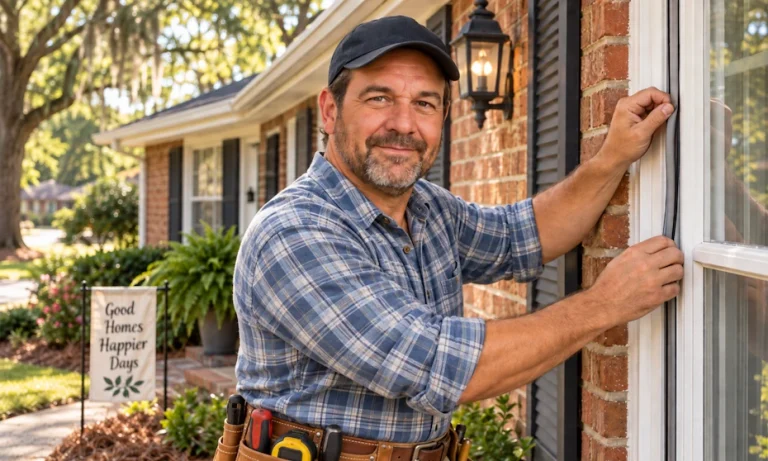
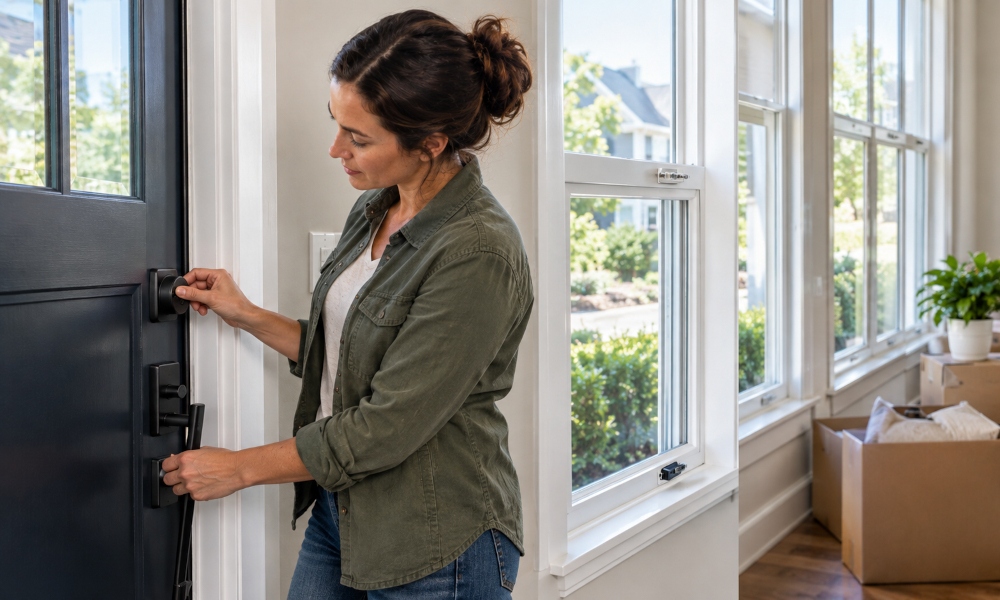
That’s why I recommend rekeying the exterior locks as one of the first security steps after buying a home. You have no practical way of knowing how many copies of the old keys are still out there. They may have been given to contractors, cleaners, neighbors, tenants, or others over the years.
You don’t necessarily need to replace every lock. Rekeying lets you keep the existing hardware while changing which keys work.
While you’re at it, walk around the house and test each exterior door and window lock.
If the home has a garage door opener, reset the access code and follow the manufacturer’s instructions for changing remotes or access settings.
These checks take only a few minutes, but they give you a much better understanding of the home’s entry points.
5. Look Over the Water Heater and Appliance Connections
Before you rely on the home’s appliances every day, take a few minutes to check the equipment and its connections.
Start with the water heater.
Check the manufacturer’s information to determine the unit’s age. Then look for visible rust, corrosion, leaks, or problems around the pressure relief valve.
Many tank-style water heaters have a general service life of about eight to twelve years, although actual lifespan varies by equipment, installation, maintenance, and operating conditions.
You should also look at the appliances that came with the house.
If you’re not comfortable evaluating an appliance installation yourself, this is a good time to have an appliance professional take a look. I recommend Appliance EMT, an appliance repair service in Atlanta, Georgia, when a homeowner needs help identifying an appliance problem or checking an installation. Having the equipment checked before you use it regularly can help catch issues that aren’t obvious when an appliance simply turns on and runs.
A dishwasher, washing machine, dryer, or other appliance can be plugged in and appear to work while still having an installation problem. Check visible water connections for leaks, and make sure the dryer vent appears properly connected.
Don’t improvise a repair if you find a loose, damaged, poorly vented, or otherwise questionable connection. Have a professional evaluate the issue before regular use.
This is particularly important with appliances because several systems can be involved at once. A dryer, for example, may involve electrical power, airflow, and venting. A washing machine involves water supply and drainage connections in addition to the appliance itself.
A Few Atlanta-Specific Things to Keep in Mind
After the basic safety walkthrough, take a closer look at what your Atlanta home likely needs.
Atlanta has a wide range of housing ages and styles. Older neighborhoods such as Grant Park, Candler Park, and Kirkwood include homes that have been renovated repeatedly over the years.
That history matters.
A kitchen may have been remodeled recently while another part of the house still has older electrical or plumbing components. Instead of assuming that everything was updated at the same time, pay attention to differences you notice during your walkthrough.
Newer homes in parts of Gwinnett, Forsyth, and Cobb counties may have more consistent systems, but that doesn’t mean you can skip the basic checks.
Atlanta’s climate is another reason to pay attention to maintenance after moving in. Heat, humidity, and seasonal pollen can put additional demands on HVAC systems. Checking the HVAC filter during your first week is an easy addition to the move-in checklist.
You don’t need to diagnose every issue you see. If something looks unusual, make a note of it and have the appropriate professional evaluate it.
One Lesson New Homeowners Often Learn the Hard Way
One thing that comes up repeatedly is the assumption that an appliance must have been installed correctly because it turns on and works.
That’s not necessarily the case.
A neighbor who bought a home near Sandy Springs discovered this with a dryer installed by a previous owner. The dryer was experiencing electrical problems during operation, and the vent connection was loose.
The problem wasn’t simply that the dryer wasn’t working properly. The installation needed to be evaluated as a complete system.
That’s a useful distinction to remember when you move into a home with existing appliances. Don’t judge an installation solely by whether the appliance turns on.
Also check the visible water, electrical, gas, and vent connections.
Move-In Safety Mistakes to Avoid
Most new homeowners don’t ignore safety checks intentionally. Moving simply creates a lot of competing priorities.
A few assumptions are worth avoiding.
“The home passed inspection, so everything is fine.”
A home inspection reflects conditions at a particular point in time. It doesn’t guarantee every system is current or that nothing has changed.
“The lights work, so the electrical panel must be fine.”
Working lights don’t tell you whether the panel labels are accurate or whether the panel has a problem that requires professional attention.
“The previous owner seemed trustworthy, so the existing locks are fine.”
Rekeying isn’t about assuming anything negative about the seller. It’s simply a way to take control of who can access your new home.
“The appliance works, so the installation must be correct.”
An appliance can operate even with a loose water connection, a questionable electrical connection, or an improperly connected vent.
Frequently Asked Questions
Do I need to check the electrical panel if the home already passed inspection?
Yes. A quick walkthrough helps you understand the panel and determine whether the circuit labels match what they actually control. If you see scorch marks, significant corrosion, double-tapped breakers, or other concerning conditions, have an electrician inspect it.
How do I find my main water shutoff?
Start in the basement, crawlspace, or utility area near where the water line enters the house. In some newer communities, the shutoff may be located at the street. If you cannot find it, your water utility or a plumber may be able to help you locate it.
Should I rekey the locks after buying a house?
Rekeying exterior locks is a practical way to make sure you control access to the property. You cannot know exactly how many copies of the old keys exist, so changing or rekeying the locks removes that uncertainty.
How long does a typical tank water heater last?
Many tank water heaters last roughly eight to twelve years, although actual lifespan varies. Check the manufacturer’s information and look for age, corrosion, leaks, and other visible problems.
When should I call a professional?
Call a qualified professional when you find a potentially unsafe electrical condition, a gas-related problem, a significant water leak, damaged equipment, or an installation you cannot safely evaluate.
A DIY walkthrough helps you understand your new home and identify potential problems. It isn’t a substitute for professional repairs or an inspection when one is needed.
Do This Before the Boxes Take Over
You don’t need a full afternoon to get familiar with your home’s most important systems.
Before the boxes cover the floors and furniture blocks access to utility areas, walk through the house with a flashlight. Check the electrical panel, locate the water and gas shutoffs, test the smoke and carbon monoxide detectors, check the exterior locks and windows, and look over the water heater and appliance connections.
If you’re moving into an older Atlanta home, spend a little extra time figuring out which systems were updated and which may still reflect an earlier renovation.
It may not be the most exciting part of moving day, but knowing where everything is and catching an obvious problem early can make your first few weeks in the new house much easier.
And once the safety walkthrough is done, you can get back to the boxes, the furniture, and finally figuring out where the coffee maker belongs.
About the Author