The first time I defrosted my chest freezer, I assumed it would take the better part of a Saturday. I unplugged it, opened the lid, and waited. Hours later, I was still staring at thick sheets of ice that barely seemed to be melting.
Eventually, I discovered that the cleaning wasn’t what took so long. It was the waiting.
After trying a few different methods over the years, I’ve settled on a routine that lets me deep clean and defrost a freezer in about two hours, including drying it out and putting everything back inside. Whether you’re dealing with heavy frost or just keeping up with routine freezer maintenance, this method gets the job done without turning it into an all-day project.
Key Takeaways
- Most freezers can be fully cleaned and defrosted in about two hours.
- Hot water and steam melt ice much faster than waiting for it to thaw naturally.
- Cleaning while the frost softens saves time.
- Drying the interior thoroughly helps prevent new frost from forming.
- Regular maintenance improves efficiency and may reduce energy use.
Why Defrosting Matters
Frost does more than take up storage space. Once it becomes thick enough, it acts as insulation, making it harder for the freezer to cool efficiently. That forces the compressor to work longer, increases energy consumption, and can lead to uneven temperatures.
Why is there ice buildup in freezer? The answer usually involves excess moisture entering the appliance, poor door seals, or issues with the defrost system. Understanding the cause makes it much easier to keep frost from coming back.
I noticed the difference with my garage freezer one summer. It seemed to run almost nonstop. After nearly an inch of frost was removed, it became noticeably quieter within a day.
Routine freezer maintenance can also:
- improve cooling performance
- reduce energy use
- eliminate lingering odors
- make food easier to organize
- extend the appliance’s lifespan
Many manufacturers also recommend defrosting manual-defrost freezers once frost reaches about one-quarter inch thick because excessive buildup reduces efficiency.
My Step-by-Step Method
Step 1: Empty and Sort Everything
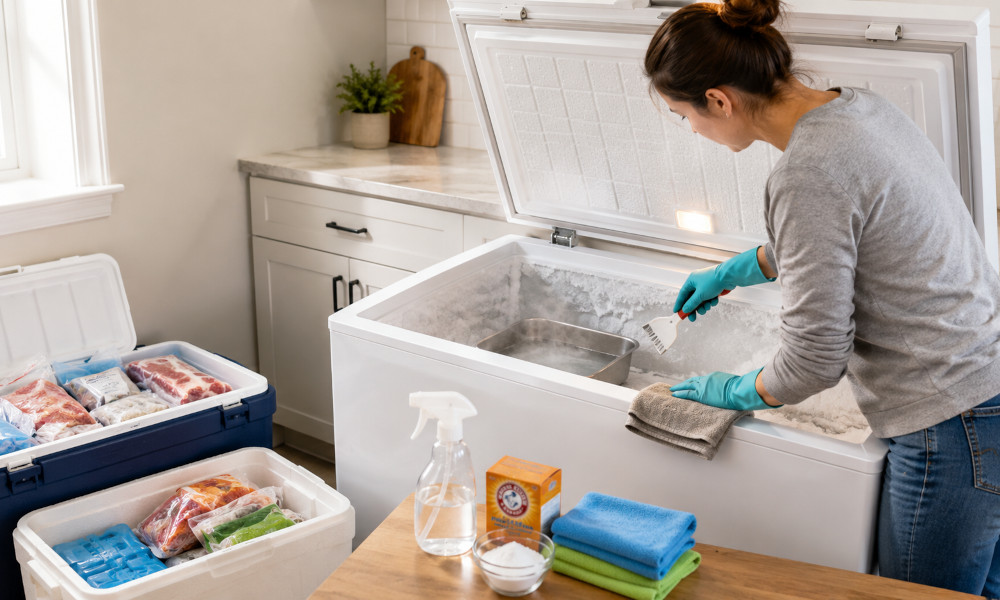
Take everything out before you start. I use one cooler with ice packs for food I’m keeping and another container for expired items that need to be thrown away.
This is also the perfect opportunity to check expiration dates. I almost always find a forgotten container buried at the bottom.
Step 2: Speed Up the Defrost
Instead of waiting for the ice to melt naturally, place a shallow pan of hot water inside the unplugged freezer and close the lid or door for about 15 minutes. Surprisingly, trapped steam quickly loosens stubborn frost.
Afterward, press hot, damp towels against thicker sections and gently remove softened ice with a plastic scraper.
Avoid metal tools. They can scratch the liner or damage refrigerant lines hidden behind it.
Step 3: Clean While the Ice Softens
While the steam does its work, clean the outside of the appliance with warm water and mild dish soap.
Once the ice is gone, wipe down the interior with a mixture of 1 tablespoon of baking soda and 1 quart of warm water. It removes odors without leaving behind harsh chemical residue.
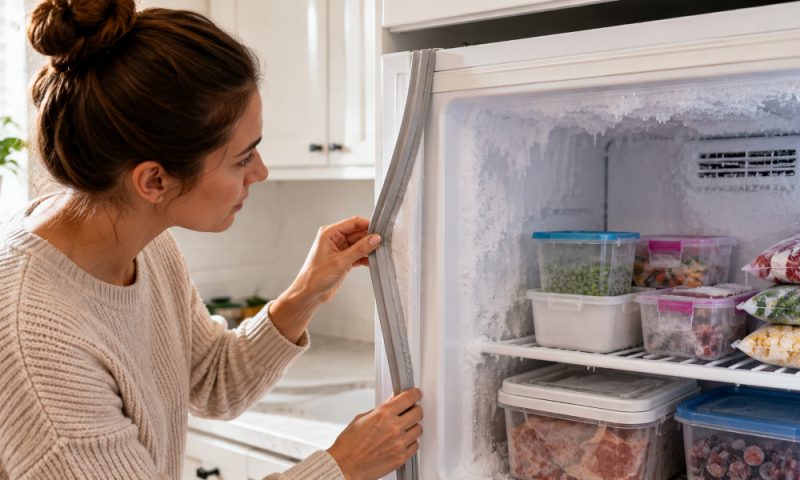
Don’t forget the door gasket. Dirt, crumbs, and worn seals allow humid air inside, which encourages frost buildup.
Step 4: Dry Every Surface
This is the step many people rush.
Any remaining moisture freezes quickly, forming the foundation for the next layer of frost.
Use clean towels to dry every shelf, corner, and wall before closing the freezer.
Step 5: Reload and Restart
Organize similar foods together before putting everything back. Keeping frequently used items near the front reduces how long the door stays open later.
After restarting the freezer, I usually wait about 20 minutes before adding newly purchased frozen food.
Natural Defrost vs. Hot Water Method
| Method | Approximate Time | Best For |
| Natural thawing | 3–6 hours | Light frost buildup |
| Hot water and steam | 20–30 minutes | Moderate to heavy frost |
| Hot towels plus plastic scraper | 30–45 minutes | Thick, stubborn ice |
How to Keep Frost from Coming Back
Cleaning helps, but a few simple habits make a much bigger difference over time.
- Check the door gasket regularly for cracks or gaps.
- Let hot food cool before freezing it.
- Keep the temperature around 0°F (-18°C).
- Avoid leaving the door open longer than necessary.
- Don’t overfill the freezer because good airflow matters.
- Remove small frost patches before they grow thicker.
These small habits have reduced the frequency with which I need to perform a complete manual defrost. They’re also part of a broader routine for keeping household appliances running efficiently. If you’re looking for more preventive tips, check out our guide on how to maintain your home appliances before they break down.
Why Frost Keeps Returning
If a thick frost returns within a few days, cleaning usually isn’t the problem.
Common causes include:
- damaged door gaskets
- frequent door openings
- placing warm food inside
- high indoor humidity
- incorrect temperature settings
- problems with the automatic defrost system
If you’ve ruled out the obvious causes and the frost returns quickly, the issue may involve the evaporator, thermostat, sensors, or defrost components.
I’ve recommended Appliance EMT to several neighbors around Atlanta when routine maintenance wasn’t enough. They were able to diagnose issues that cleaning alone couldn’t solve.
A Local Tip for Atlanta Homeowners
One thing I’ve noticed after living around Atlanta is how much humidity affects garage freezers.
During the summer, every time the door opens, warm, moisture-filled air rushes inside. My garage freezer develops frost much faster in July than in winter, even though my habits stay the same.
Homes in areas like Marietta and Alpharetta often keep chest freezers in garages where temperatures are much higher than inside the house. If that’s your setup, expect to defrost more often during Georgia’s hottest months.
Common Mistakes to Avoid
- Scraping ice with metal tools
- Forgetting to dry the interior completely
- Putting hot food directly into the freezer
- Ignoring worn door gaskets
- Waiting until frost becomes several inches thick
Avoiding these mistakes makes future cleanings much easier.
Frequently Asked Questions
How often should I deep clean and defrost my freezer?
Most households only need to do it every six months. Manual-defrost models and garage freezers may benefit from cleaning every three or four months.
Can I use a hair dryer?
It’s possible, but I don’t recommend it. Heat can damage plastic surfaces, and combining electricity with melting water creates unnecessary safety risks.
Why does frost return so quickly?
Rapid frost buildup usually points to a faulty door seal, excess humidity, warm food, incorrect temperature settings, or a mechanical issue.
Are chest freezers more likely to frost up?
Often, yes. Many are located in garages where temperatures and humidity fluctuate more than inside the home.
Final Thoughts
Defrosting a freezer doesn’t have to take an entire day. Once I stopped waiting for the ice to melt on its own and started using steam to speed up the process, the job became much faster and far less frustrating.
Even if your freezer doesn’t look particularly frosty, checking it every few months prevents thick ice from building up and keeps the appliance running more efficiently. A little maintenance today is much easier than spending hours chipping away inches of ice later.
About the Author